Global Semiconductor Industry Landscape Restructuring: Southeast Asian Rise Brings New Investment Opportunities
\nIn 2026, the global semiconductor industry is experiencing unprecedented structural changes. With the rapid development of emerging technologies such as artificial intelligence, 5G communications, and the Internet of Things, chip demand is showing explosive growth. At the same time, the global semiconductor supply chain is accelerating its restructuring, with Southeast Asia, especially Thailand, rapidly emerging as a new semiconductor industry center, bringing unprecedented value investment opportunities to investors. This article will analyze the core logic of chip investment from multiple dimensions, helping investors grasp investment opportunities in the transformation of the semiconductor industry.
\n\nGlobal Semiconductor Market: Industrial Upgrading Driven by Demand
\nAccording to the latest report from the Semiconductor Industry Association (SEMI), the global semiconductor market size is expected to exceed $600 billion in 2026, with a compound annual growth rate maintained at over 8%. This growth is mainly driven by three major forces: first, the popularization of artificial intelligence applications, especially the continuous demand for high-performance computing chips from large model training; second, the chip upgrade demand during the evolution from 5G communication to 6G; third, the expansion of the automotive-grade chip market driven by the trend of automotive electronics.
\n\nNotably, the global semiconductor industry is undergoing a transformation from consumer electronics-driven to diversified application-driven. Traditionally, the smartphone and PC markets were the main growth engines for the semiconductor industry, but as these markets saturate, growth momentum is weakening. Instead, emerging application fields such as data centers, industrial control, medical electronics, and smart homes are becoming new pillars of growth for the semiconductor industry. These fields have more diversified demand for chips, providing investors with more diversified investment opportunities.
\n\nSoutheast Asian Semiconductor Industry: A New Engine in Global Supply Chain Restructuring
\nIn recent years, Southeast Asia has rapidly emerged as an important pole in the global semiconductor industry. According to data from the Southeast Asian Semiconductor Industry Association (SEASIA), Southeast Asia attracted more than $30 billion in semiconductor-related investments in the first half of 2026, a record high. Among them, Thailand has become a leader in Southeast Asian semiconductor industry development with its superior geographical location, stable political environment, complete infrastructure, and proactive industrial policies.
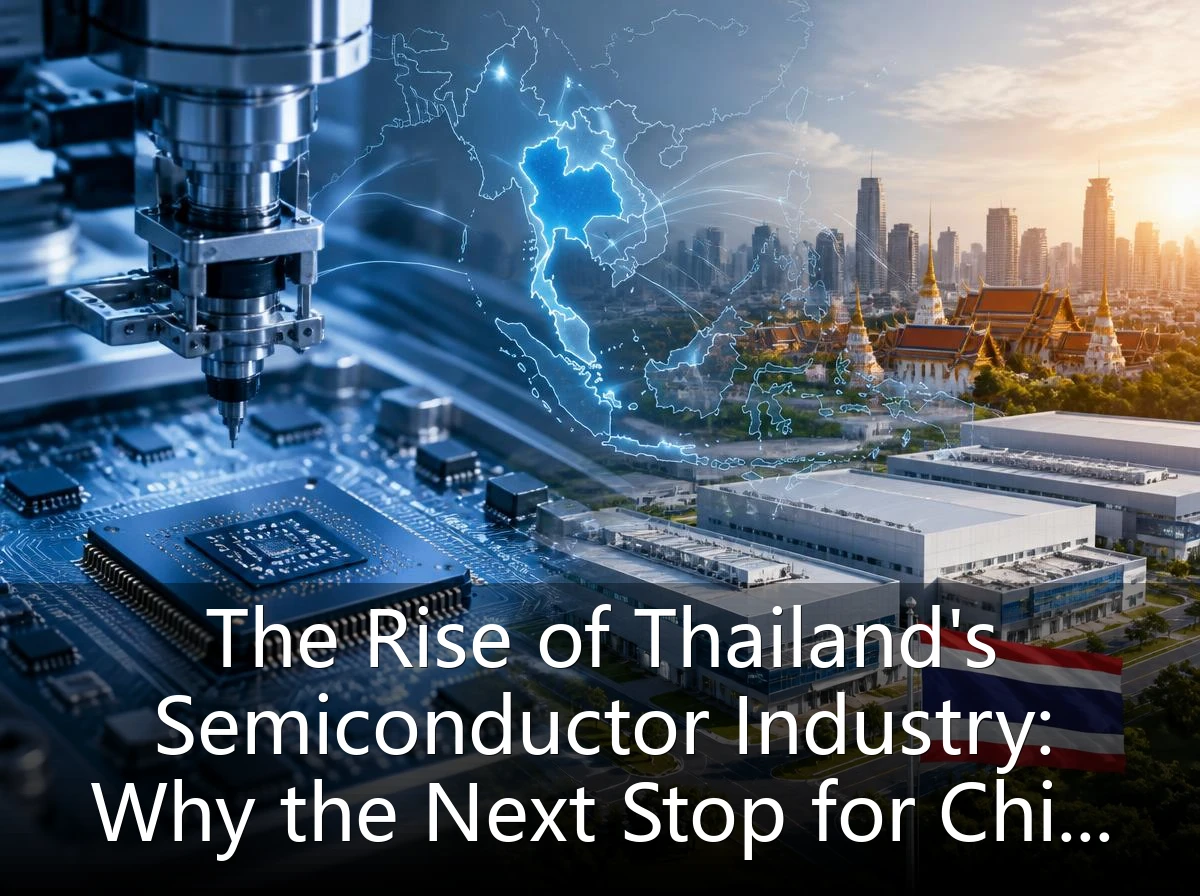
\n\nThailand's "Thailand 4.0" strategy lists the semiconductor industry as a key development area, attracting investments from international semiconductor giants including TSMC, Samsung, and Intel through a series of policy measures such as tax incentives, land support, and talent cultivation. According to statistics, from 2023 to 2026, Thailand's semiconductor industry has attracted cumulative investments exceeding $26.8 billion, creating more than 50,000 jobs, and forming a complete industrial chain from chip design, manufacturing to packaging and testing.
\n\nThai Semiconductor Industry Cluster: A Core Node in the Regional Value Chain
\nThailand's Eastern Economic Corridor (EEC) has become a core gathering area for the Southeast Asian semiconductor industry. This region has modern industrial parks, complete infrastructure, and a specialized talent cultivation system, providing comprehensive support for semiconductor industry development. Currently, the EEC has attracted more than 50 semiconductor-related enterprises, forming a complete industrial ecosystem centered on wafer manufacturing and packaging testing, supported by equipment manufacturing, material supply, and design services.
\n\nParticularly noteworthy is that Thailand's first 12-inch wafer factory officially broke ground in August 2026, with expected production to begin by the end of 2027. This wafer factory will adopt the most advanced process technology, mainly producing logic chips and power semiconductors, which will significantly enhance Thailand's semiconductor manufacturing capabilities. Meanwhile, the Thai government is also vigorously promoting semiconductor talent cultivation plans, aiming to train 60,000 semiconductor professionals by 2030 to provide talent support for industrial development.
\n\nChip Investment Logic: From Technology Cycle to Value Investment
\nWhen analyzing chip investment value, multiple dimensions need to be considered. First, from a technology cycle perspective, the semiconductor industry has obvious cyclical characteristics. Currently, the global semiconductor industry is in the early stage of a new upward cycle, especially in high-growth segments such as AI chips and advanced packaging. Investors should focus on companies at the technological frontier, which are expected to achieve excess returns in technological changes.
\n\nSecond, from an industry chain perspective, the semiconductor industry chain is long and with detailed division of labor, with different segments having different investment values. Upstream semiconductor equipment and materials have high technical barriers and high gross margins, but also high market concentration; midstream chip design segments are innovative but highly competitive; downstream packaging and testing segments have relatively low technical thresholds but large market scales. Investors should choose appropriate industry chain segments for investment based on their own risk preferences and investment cycles.
\n\nThird, from a regional layout perspective, the global semiconductor industry is accelerating its shift to Southeast Asia. This trend provides investors with opportunities for regional layout. Thailand's semiconductor industry cluster has obvious location advantages, with political stability, complete infrastructure, relatively low labor costs, and strong government support, making it an ideal choice for semiconductor industry investment.
\n\nAI Chip Market: Leading New Growth Points in the Semiconductor Industry
\nArtificial intelligence is currently the most important growth engine for the semiconductor industry. With the rapid development of large models and generative AI technologies, demand for high-performance computing chips is showing explosive growth. International giants such as NVIDIA and AMD dominate the AI chip field, but at the same time, they provide innovation opportunities for emerging companies.
\n\nNotably, AI chips are evolving from general computing to specialized computing, with specialized AI chips for specific application scenarios becoming new investment hotspots. For example, niche fields such as low-power AI chips for edge computing and high-performance AI chips for autonomous driving have significant market potential. Investors should pay attention to innovative companies in these niche fields, which are expected to achieve breakthroughs in specific application scenarios.
\n\nInvestment Strategies and Risk Warnings
\nIn semiconductor industry investment, investors should adopt a diversified strategy, dispersing investments across different technology routes, industry chain segments, and regional markets. Specifically, the following aspects can be considered:
\n\n- \n
- Focus on companies with core technical barriers, especially those leading in frontier areas such as AI chips, advanced packaging, and third-generation semiconductors; \n
- Invest in supporting companies in semiconductor industry clusters, such as equipment manufacturing, material supply, and testing services, which benefit from industry cluster effects; \n
- Grasp investment opportunities in the development of Southeast Asian, especially Thai, semiconductor industries, and pay attention to companies with local layouts; \n
- Pay attention to changes in the semiconductor industry cycle, making layouts during industry downturns and harvesting during peaks. \n
At the same time, investors should also pay attention to risk factors in semiconductor industry investment. First, the semiconductor industry has rapid technological updates and short product iteration cycles, posing technology route risks; second, changes in the global trade environment may affect semiconductor supply chain stability; third, geopolitical risks may lead to changes in industrial policies, affecting the investment environment. Investors should fully evaluate these risk factors and do a good job in risk management.
\n\nConclusion: Grasping Investment Opportunities in the Transformation of the Semiconductor Industry
\nThe global semiconductor industry is undergoing profound changes, and the rise of Southeast Asia, especially Thailand, brings new opportunities for investors. From an investment logic perspective, the semiconductor industry has long-term growth potential, especially driven by emerging technologies such as AI, 5G, and the Internet of Things, market demand will continue to expand. Investors should focus on technological frontiers, key links in the industry chain, and regional industry clusters, grasping investment opportunities in the transformation of the semiconductor industry.
\n\nFor REITs and real estate investment trust investors in Thailand and the Asia-Pacific region, the development of the semiconductor industry also provides new opportunities for related infrastructure investment. With the formation of semiconductor industry clusters, supporting industrial parks, logistics facilities, talent apartments and other real estate demand will grow rapidly, bringing stable rental income and asset appreciation space for real estate investment trusts.
\n\nIn conclusion, chip investment is a long-term and systematic investment activity that requires investors to have professional knowledge and keen market insight. Against the background of the restructuring of the global semiconductor industry landscape, investors should grasp the historical opportunity of the rise of the semiconductor industry in Southeast Asia, especially Thailand, and find value investment opportunities in technological innovation, industrial upgrading, and regional layout to achieve long-term and stable investment returns.