Thailand Semiconductor Industry Reaches Historic Turning Point
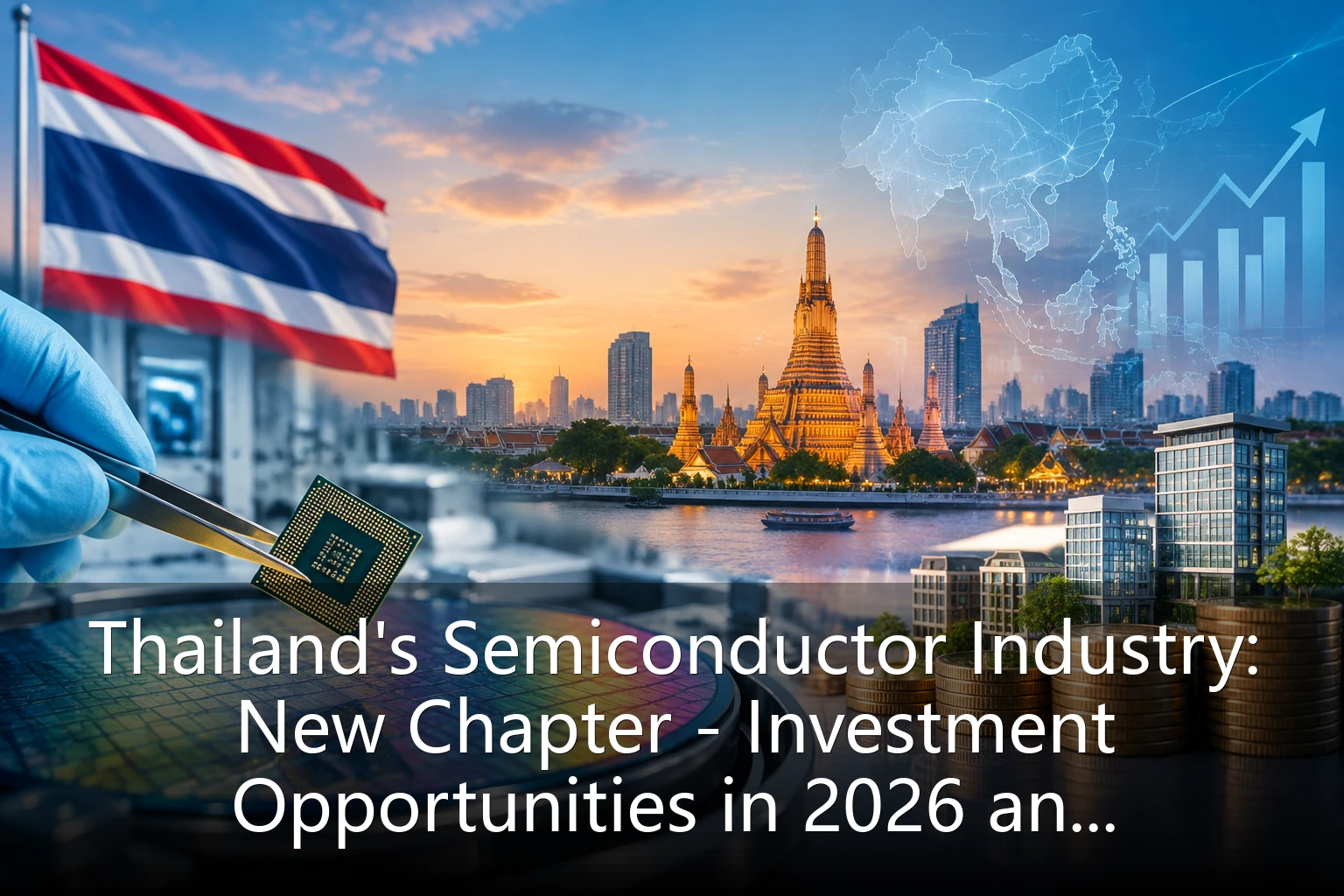
In Q4 2026, Thailand's semiconductor industry has reached a historic development opportunity. As the global semiconductor supply chain accelerates restructuring, Thailand has successfully attracted huge investments from multiple international chip giants by leveraging its advantageous geographical location, stable political environment, and favorable industrial policies. This wave of investment will not only significantly increase Thailand's semiconductor production capacity but will also profoundly impact the industrial landscape and REITs market performance across the Asia Pacific region.
International Chip Giants Increasingly Invest in Thailand Market
According to the latest industry data, since Q3 2026, the world's top ten chip manufacturers, including TSMC, Samsung, and Intel, have announced expanded investments in Thailand. Among them, TSMC plans to build a new 12-inch wafer factory near Bangkok, with an expected investment exceeding $5 billion, scheduled to be operational by the end of 2027; Samsung Electronics announced a 50% increase in production capacity at its semiconductor factory in Chonburi Province, with an additional advanced process production line; Intel also announced the establishment of a research and development center in Thailand's Eastern Economic Corridor (EEC) area, focusing on the development of advanced packaging technologies.
The investment decisions of these international giants are not accidental. In recent years, the Thai government has actively promoted the "Thailand 4.0" strategy, listing the semiconductor industry as a key development area and introducing a series of incentive policies including tax incentives, land supply, and talent attraction. Additionally, Thailand has the most complete electronic industry supporting system in the Southeast Asian region, providing good industrial chain support for chip manufacturing.
Market Drivers Behind Capacity Expansion
Accelerating Global Supply Chain Restructuring
Since 2026, the global semiconductor industry has undergone profound supply chain restructuring. Geopolitical tensions, intensifying trade frictions, and post-pandemic emphasis on supply chain security have prompted countries to accelerate localization or regionalization of semiconductor industries. As an important manufacturing base in Southeast Asia, Thailand has become one of the preferred destinations for international chip companies to diversify supply chain risks, leveraging its mature experience in electronic assembly, packaging, and testing.
Sustained Growth in Southeast Asian Market Demand
In recent years, the digital economy in Southeast Asia has flourished, showing explosive growth in demand for various types of chips. According to market research institutions, the Southeast Asian chip market is expected to exceed $50 billion in 2026, with an annual growth rate maintained above 15%. As the electronics manufacturing center in Southeast Asia, Thailand's demand for various types of chips is particularly strong, providing a solid market foundation for semiconductor manufacturing capacity expansion.
Unprecedented Policy Support
The Thai government attaches great importance to the development of the semiconductor industry, viewing it as key to economic transformation and industrial upgrading. In August 2026, the Thai government launched the "Ten-Year Development Plan for the Semiconductor Industry (2026-2035)", aiming to attract over $100 billion in semiconductor industry investment in the next decade, positioning Thailand as an important global semiconductor industry base. This plan not only clarifies industrial development goals but is also supported by a series of specific measures including tax reductions, land supply, and talent cultivation, creating a favorable policy environment for the development of the semiconductor industry.
Profound Impact on Asia Pacific REITs Market
REITs Value Revaluation in Semiconductor Industry
The rapid development of Thailand's semiconductor industry has brought new investment opportunities to the Asia Pacific region, especially Thailand's REITs market. With the construction and expansion of semiconductor industrial parks, related industrial property REITs will directly benefit. According to statistics, since 2026, the average increase in Thailand's industrial property REITs has exceeded 15%, with REITs focusing on semiconductor industrial parks showing particularly outstanding performance, with some REITs achieving annualized returns of over 20%.
Industry Chain Synergy Effects Emerging
The development of the semiconductor industry has not only driven demand for directly related industrial properties but has also generated substantial demand for supporting facilities such as logistics and warehousing, data centers, and R&D centers. This industry chain synergy effect has further expanded the investment scope and opportunities for REITs. For example, with the construction of semiconductor industrial parks, surrounding logistics and warehousing REITs, data center REITs, and others have also encountered opportunities for value revaluation.
Cross-Border Capital Accelerating Inflow
The rise of Thailand's semiconductor industry has attracted significant attention from international capital. According to data, in the first three quarters of 2026, international capital flowing into Thailand's semiconductor industry has exceeded $20 billion, with a considerable portion entering the market through indirect investment methods such as REITs. This capital inflow has not only enhanced the liquidity of Thailand's REITs market but has also increased its international influence.
Investment Opportunities and Risk Analysis
Investment Opportunities
- Semiconductor Park REITs: Directly benefit from semiconductor park construction, with stable rental income and significant growth potential
- Supporting Infrastructure REITs: Including logistics, warehousing, data centers and other supporting facility REITs
- Industry Chain Upstream and Downstream REITs: Including electronic components, packaging and testing and other related industry REITs
- Regional Diversified REITs: REITs positioned in other Southeast Asian countries, sharing the regional semiconductor industry development dividends
Risk Warnings
- Technology Iteration Risk: The semiconductor industry has rapid technological updates and replacements, which may affect the long-term value of related assets
- Policy Change Risk: Adjustments in industrial policies of various countries may affect the investment environment
- Intensifying Market Competition: As more capital enters, related REITs valuations may face adjustment pressure
- Geopolitical Risk: Changes in international relations may affect industrial chain layout and investment decisions
Future Outlook and Investment Recommendations
Looking ahead, Thailand's semiconductor industry will continue to maintain rapid development momentum. According to industry forecasts, by 2030, Thailand's semiconductor industry output is expected to reach $100 billion, accounting for over 5% of the global semiconductor market share. This development will continue to inject new vitality into the Asia Pacific REITs market.
For investors, the following strategies are recommended:
- Long-term Holding Strategy: The development of the semiconductor industry is long-term, suitable for long-term investment tools such as REITs
- Diversified Allocation: Reasonable allocation among different types and regions of semiconductor-related REITs
- Focus on Policy Trends: Closely track changes in semiconductor industry policies of various countries and adjust investment strategies in a timely manner
- In-depth Research of Industry Chain: Deeply understand the characteristics and development trends of each link in the semiconductor industry chain to grasp investment opportunities
Conclusion
The rise of Thailand's semiconductor industry is an important symbol of the industrial landscape restructuring in the Asia Pacific region and also a significant opportunity for the development of the REITs market. Investors should fully recognize this trend, grasp the investment opportunities, while also being alert to related risks and making rational investment decisions. With the continuous development of Thailand's semiconductor industry, the Asia Pacific REITs market will usher in broader development opportunities.