
In-depth Analysis of Chip Investment Logic: New Opportunities and Value Investment Strategies in the Semiconductor Industry by 2026
Against the backdrop of increasingly fierce global technological competition, the chip industry has become a core battlefield in national economic strategies. As digital transformation accelerates, semiconductor market demand continues to expand, making chip investment a focus for investors. This article will deeply analyze the core logic and future trends of chip investment from multiple dimensions including national strategy, market demand, and technological breakthroughs, providing investors with professional reference basis.
I. Analysis of Chip Investment from the National Strategy Perspective
The semiconductor industry is known as the "food" of modern industry and is a foundational industry supporting digital economic development. Governments worldwide have elevated the chip industry to national strategic importance, promoting industrial development through policy support and financial investment. In this context, chip investment not only has commercial value but also carries strategic significance for national security.
1.1 Restructuring of the Global Semiconductor Industry Landscape
In recent years, the global semiconductor industry landscape is undergoing profound changes. The United States is investing heavily in supporting domestic chip manufacturing through the "CHIPS and Science Act"; the EU has launched the "European Chips Act" aiming to increase semiconductor self-sufficiency; and Asian countries like Japan and South Korea are also increasing support for the semiconductor industry. This global industrial competition provides broad policy dividend space for chip investment.
1.2 Strategic Upgrading of China's Semiconductor Industry
China has listed the semiconductor industry as a key strategic emerging industry for development, clarifying the industrial development direction through policy documents such as the "14th Five-Year Plan". As the domestic semiconductor industry chain continues to improve, China has made significant progress in chip design, manufacturing, and packaging and testing. This trend provides investors with abundant industrial chain investment opportunities.
1.3 Rise of Thailand's Semiconductor Industry
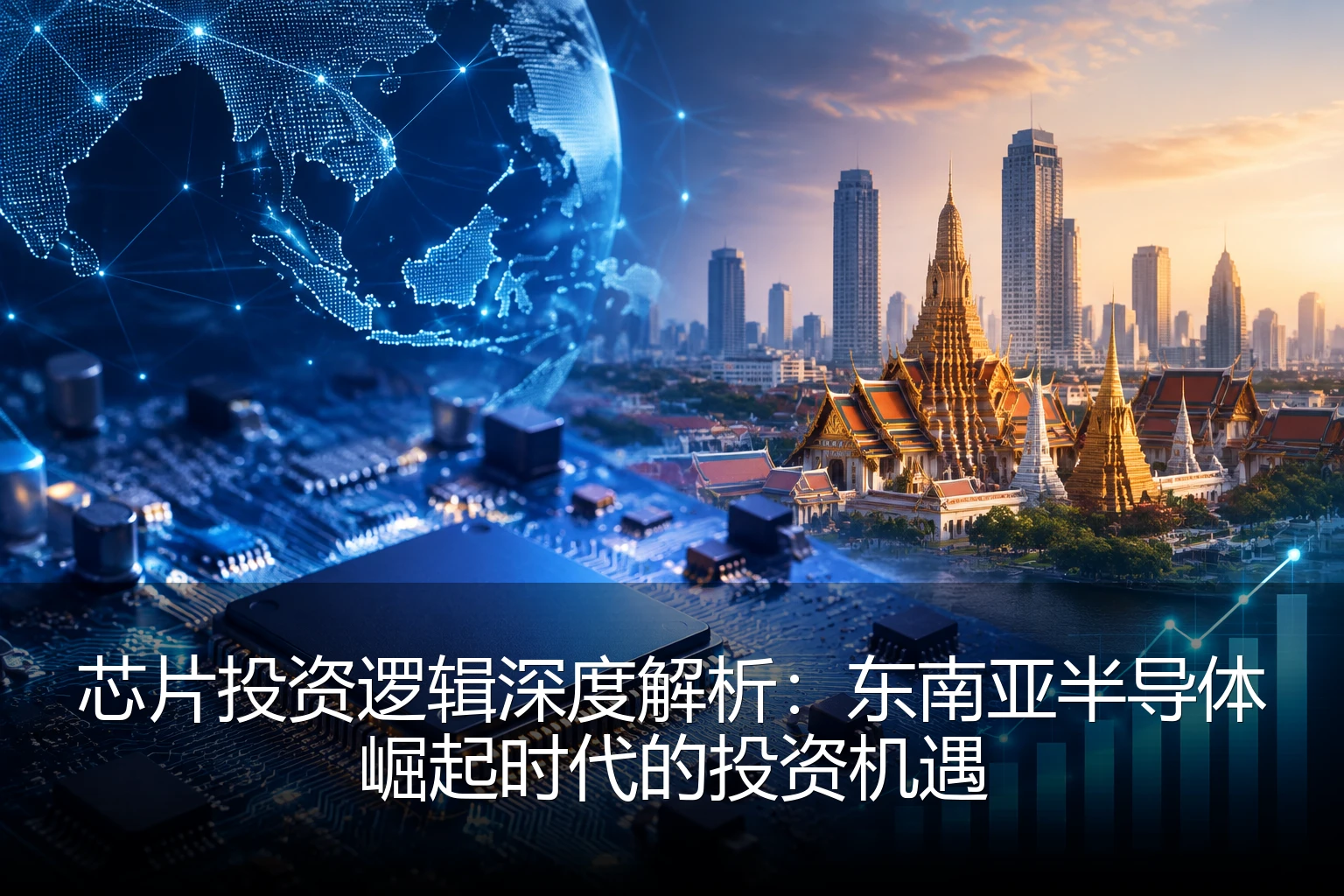
As an important economy in Southeast Asia, Thailand has been actively developing its semiconductor industry in recent years, attracting investments from many international semiconductor companies with policy support, geographical advantages, and cost advantages. The rise of Thailand's semiconductor industry has added a new growth point for chip investment in the Asia-Pacific region, providing investors with opportunities for regional layout.
II. Market Demand Analysis for Chip Investment
The continuous development of the chip industry relies on strong market demand. With the rapid popularization of emerging technologies such as 5G, artificial intelligence, Internet of Things, and cloud computing, semiconductor market demand is showing diversified and high-end development trends. In-depth analysis of market demand changes helps investors grasp the direction and rhythm of chip investment.
2.1 Explosive Demand for 5G and Communication Chips
The global deployment of 5G networks has driven rapid growth in demand for communication chips. From base station construction to terminal devices, 5G chips have become an important growth point in the semiconductor market. According to industry data, the global 5G chip market size is expected to reach $200 billion by 2026, with a compound annual growth rate maintained at over 15%. This sub-sector provides investors with clear growth expectations.
2.2 AI Chips Leading a New Round of Technological Revolution
The rapid development of artificial intelligence technology has placed higher demands on computing power, making AI chips a new growth engine for the semiconductor industry. From cloud training to edge computing, the application scenarios of AI chips continue to expand. By 2026, the global AI chip market size is expected to exceed $100 billion, becoming a hot area for chip investment. Investors can focus on investment opportunities in AI chip design, manufacturing, and other links.
2.3 Continuous Growth in Demand for Automotive Chips
As the electrification and intelligence of automobiles accelerate, demand for automotive chips is showing explosive growth. From traditional fuel vehicles to new energy vehicles, from assisted driving to autonomous driving, the application scenarios of automotive chips continue to expand. Industry forecasts show that the global automotive chip market size will reach $80 billion by 2026, with an annual growth rate exceeding 20%. This sub-sector provides investors with long-term stable growth opportunities.
2.4 Rise of Chip Demand in Southeast Asia
As a global manufacturing center, Southeast Asia has continuously growing demand for chips. With the advancement of digital economy and smart manufacturing, demand for various types of chips is expanding in Southeast Asian countries. Especially in countries like Thailand and Vietnam, demand growth for chips in consumer electronics and automotive electronics is particularly significant. This regional market demand provides investors with new growth space.
III. Analysis of Technological Breakthroughs in Chip Investment
The semiconductor industry is technology-intensive, and technological breakthroughs are the core driving force for industrial development. Investors need to closely follow the latest progress in semiconductor technology and grasp investment opportunities brought by technological changes.
3.1 Continuous Breakthroughs in Manufacturing Processes
Semiconductor manufacturing processes continue to advance to smaller nodes, with significant progress in the development of 3nm, 2nm, and even 1nm processes. Breakthroughs in advanced process nodes not only improve chip performance but also reduce energy consumption, providing technical support for the sustainable development of the semiconductor industry. Investors can focus on companies with competitive advantages in advanced process nodes.
3.2 Rise of Third-Generation Semiconductors
Third-generation semiconductor materials represented by silicon carbide and gallium nitride, with their characteristics of high power, high frequency, and high temperature resistance, show broad application prospects in new energy vehicles, 5G communications, photovoltaics, and other fields. Breakthroughs in third-generation semiconductor technology provide investors with new investment directions. It is expected that by 2026, the global third-generation semiconductor market size will reach $50 billion.
3.3 Innovation in Chip Design Methods
As Moore's Law gradually approaches physical limits, chip design methods continue to innovate. The emergence of new design methods such as Chiplet technology and 3D stacking technology has injected new vitality into the semiconductor industry. These technological innovations not only improve chip performance but also reduce design costs, providing investors with new investment opportunities.
3.4 Upgrading and Replacement of Semiconductor Equipment
The upgrading and replacement of semiconductor manufacturing equipment is a key factor driving industrial development. With the advancement of advanced process nodes, core equipment such as lithography machines, etching machines, and thin-film deposition equipment continue to be upgraded. Innovative breakthroughs in the semiconductor equipment field provide investors with investment opportunities in the upstream of the industrial chain.
IV. Risks and Challenges in Chip Investment
Although the chip industry has broad prospects, investors also need to pay attention to the risks and challenges and implement proper risk control.
4.1 Industrial Chain Security Risks
The global semiconductor industry chain is highly internationalized, and geopolitical risks may affect industrial chain security. Investors need to pay attention to the impact of policy changes and trade frictions in various countries on the industrial chain, and conduct risk assessment and response.
4.2 Technological Iteration Risks
The semiconductor industry has rapid technological iteration, and investors need to pay attention to technological development trends to avoid investing in fields that may be replaced by new technologies. At the same time, attention should also be paid to investment risks brought by technological route competition.
4.3 Market Cycle Fluctuation Risks
The semiconductor industry has strong cyclical characteristics and large market fluctuations. Investors need to pay attention to industry cycle changes, grasp the investment rhythm, and avoid blind investment during industry peaks.
4.4 Talent Shortage Risks
The semiconductor industry is talent-intensive, and the shortage of high-end talent is an important factor restricting industrial development. Investors need to pay attention to companies' talent reserves and training capabilities to assess their long-term competitiveness.
V. Value Investment Strategies for Chip Investment
Facing the complex situation of the chip industry, investors need to formulate scientific investment strategies to grasp investment opportunities.
5.1 Industrial Chain Layout Strategy
The semiconductor industry chain includes multiple links such as design, manufacturing, packaging and testing, equipment, and materials. Investors can choose appropriate industrial chain links for layout according to their own risk preferences. For investors with strong risk tolerance, they can focus on high-value-added links such as design and equipment; for conservative investors, they can focus on relatively stable links such as packaging and testing.
5.2 Regional Layout Strategy
The global semiconductor industry shows regional agglomeration characteristics, with the United States, Asia, and Europe each having their strengths. Investors can choose appropriate investment regions according to regional industrial characteristics. The Asia-Pacific region, especially Southeast Asia, has seen rapid development of the semiconductor industry in recent years, providing investors with new regional layout opportunities.
5.3 Sub-sector Selection Strategy
The semiconductor industry has many sub-sectors, and investors can choose sub-sectors with long-term growth potential according to technological development trends and market prospects. Currently, AI chips, automotive chips, 5G chips, and third-generation semiconductors have significant investment value.
5.4 Combination of Value Investment and Growth Investment
Chip investment can adopt a strategy combining value investment and growth investment. For industry-leading enterprises, value investment methods can be used, focusing on their valuation levels and dividend capabilities; for high-growth SMEs, growth investment methods can be used, focusing on their technological innovation and market expansion capabilities.
VI. Conclusion: Future Outlook for Chip Investment
As a foundational industry supporting digital economic development, the semiconductor industry has broad development prospects. Analysis from multiple dimensions including national strategy, market demand, and technological breakthroughs shows that chip investment has long-term value. Investors should pay attention to changes in the global semiconductor industry landscape, market development trends, and technological innovation directions, formulate scientific investment strategies, and seize the opportunities of chip investment.
As the digital economy deepens, the semiconductor industry will usher in a new round of development opportunities. Investors need to pay attention to industrial change trends, grasp the investment rhythm, and share the dividends of semiconductor industry development while controlling risks. At the same time, attention should also be paid to industrial cycle changes, prepare for long-term investment, and avoid investment losses caused by short-term market fluctuations.
In conclusion, chip investment is a systematic project that requires investors to have a global perspective and professional judgment ability. By deeply analyzing the core logic of chip investment and grasping industrial development trends, investors can obtain stable returns in the long-term development of the semiconductor industry.