
Singapore deposits surge: Foreign and safe-haven capital inflows
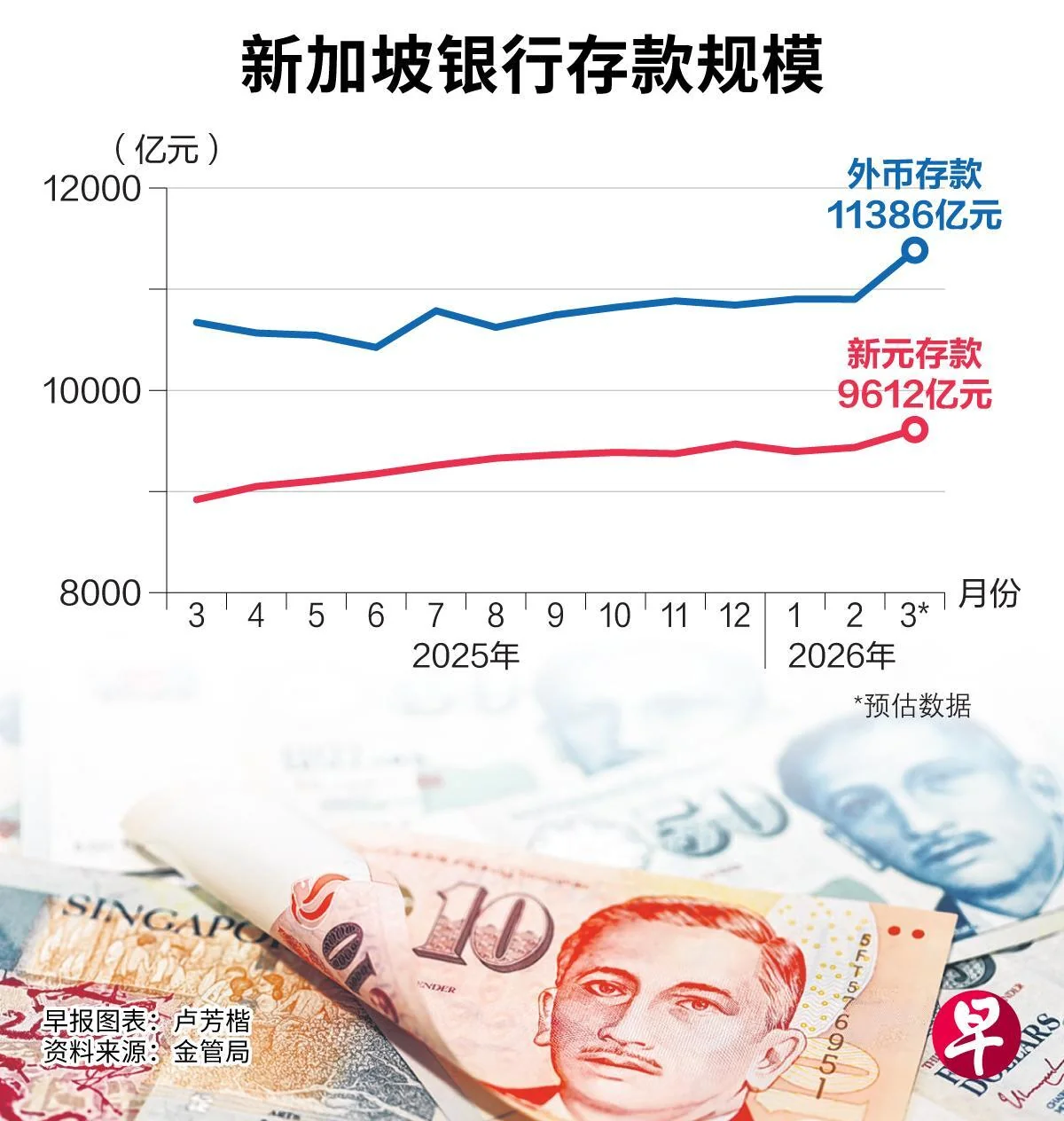
The Middle East conflict and soaring oil prices have led to cautious spending and consumption, along with an influx of foreign funds. Singapore's total deposits in March rose over 3% month-on-month, significantly higher than the usual 0.50% to 2% range, and the highest increase since July 2021 data release.
Analysts interviewed estimated that rising geopolitical risks have driven capital inflows into Singapore, and the full-year deposit growth will maintain strong momentum.
Preliminary data from the Monetary Authority of Singapore showed that total non-bank customer deposits in March approached S$2.10 trillion, up 3.26% month-on-month. Of this, foreign currency deposits reached S$1.14 trillion, up 4.45% month-on-month; Singapore dollar deposits rose 1.88% month-on-month to S$961.2 billion.
The last time local bank deposits recorded such a significant increase was in July last year, up 2.28% month-on-month.
Chen Dade, Chief Asia Strategist at Amundi Private Bank, noted in an interview that the significant increase in March deposit data is partly attributed to tensions in the Middle East.
Analysis: Lingering uncertainty prompts businesses and consumers to keep money in banks
Chen said the latest data strongly indicates that with rising global geopolitical risks, consumers and investors are tending to increase savings to weather layers of uncertainty.
"Rising global energy prices have pushed up prices, causing consumers to reduce spending and deposit more money into banks."
Song Seng Wun, economic advisor at Singapore Digital Asset Exchange (SDAX), shared the same view, noting that the Middle East war has led to cautious corporate spending and consumer sentiment. "When the political and economic outlook is full of uncertainty, everyone keeps a bit more cash just in case."
As of 4:30 pm on Wednesday (May 6), Brent crude oil was trading around US$116 per barrel, up nearly 90% year-to-date.
FSM Global fixed income research analyst Hong Weifeng noted that as expectations of global central bank rate cuts have weakened, the willingness to invest in high-yield instruments has also declined, with a tendency to keep funds within the banking system.
Non-resident deposits up 5% MoM; Singapore becomes stable haven
In March, deposits from non-Singapore residents rose over 5% month-on-month to nearly S$659.1 billion. Chen believes this reflects the market's growing perception of Singapore as a stable haven amid turbulent times.
He attributed this to two major factors: first, the Singapore dollar remains stable. As of Wednesday, the SGD had strengthened 1.16% against the USD year-to-date and appreciated 0.79% against the yen.
At the same time, Chen noted that the MAS's tightening of monetary policy in April to curb imported inflation pressures from the Middle East conflict also helps underpin market confidence in Singapore's economic stability.
Hong said that as the Middle East conflict intensifies, capital from the Gulf Cooperation Council (GCC), including sovereign wealth funds, family offices, and high-net-worth groups, is channeling to stable financial centers, with Singapore favored for its political and currency stability and sound legal system.
Outlook: Rising geopolitical risks may sustain capital inflows
Looking ahead, Chen estimates that geopolitical tensions and rising energy prices add layers of uncertainty to the economy, prompting consumers to save, and deposit growth should remain strong this year.
Hong also said that both the Middle East conflict and global fragmentation trends are driving capital to flow into financial centers like Singapore. "Taken together, these factors will support deposit growth over the next year."
Song Seng Wun believes it's still difficult to predict full-year growth given the many variables in the Middle East situation.
He said: "The US and Iran have begun negotiations. No one knows whether the war will end in a ceasefire. If it does, oil prices and inflation risks should ease, and businesses and consumers will be more willing to withdraw funds for investment or consumption; if the war continues, fueling caution, deposits will naturally keep rising."