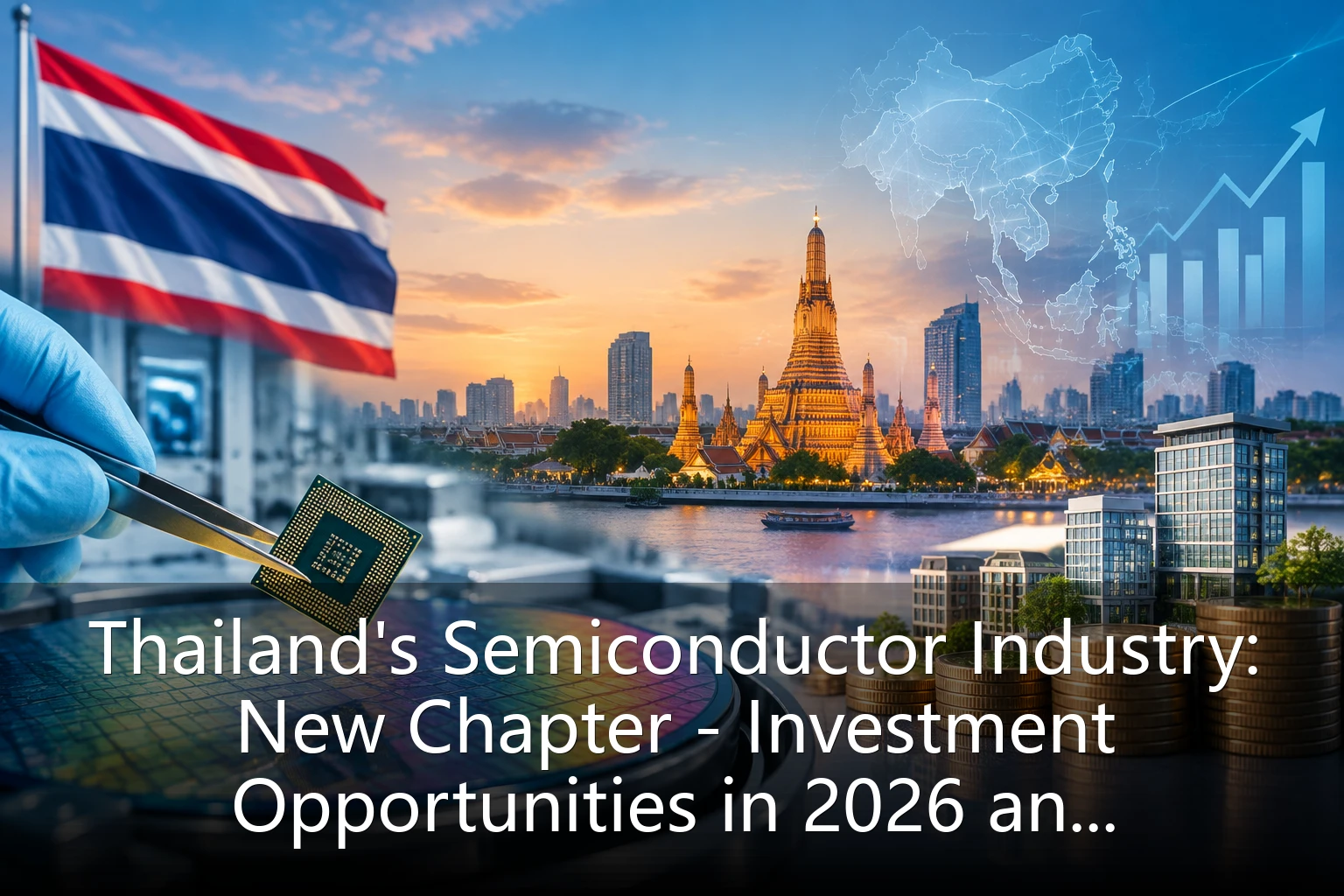
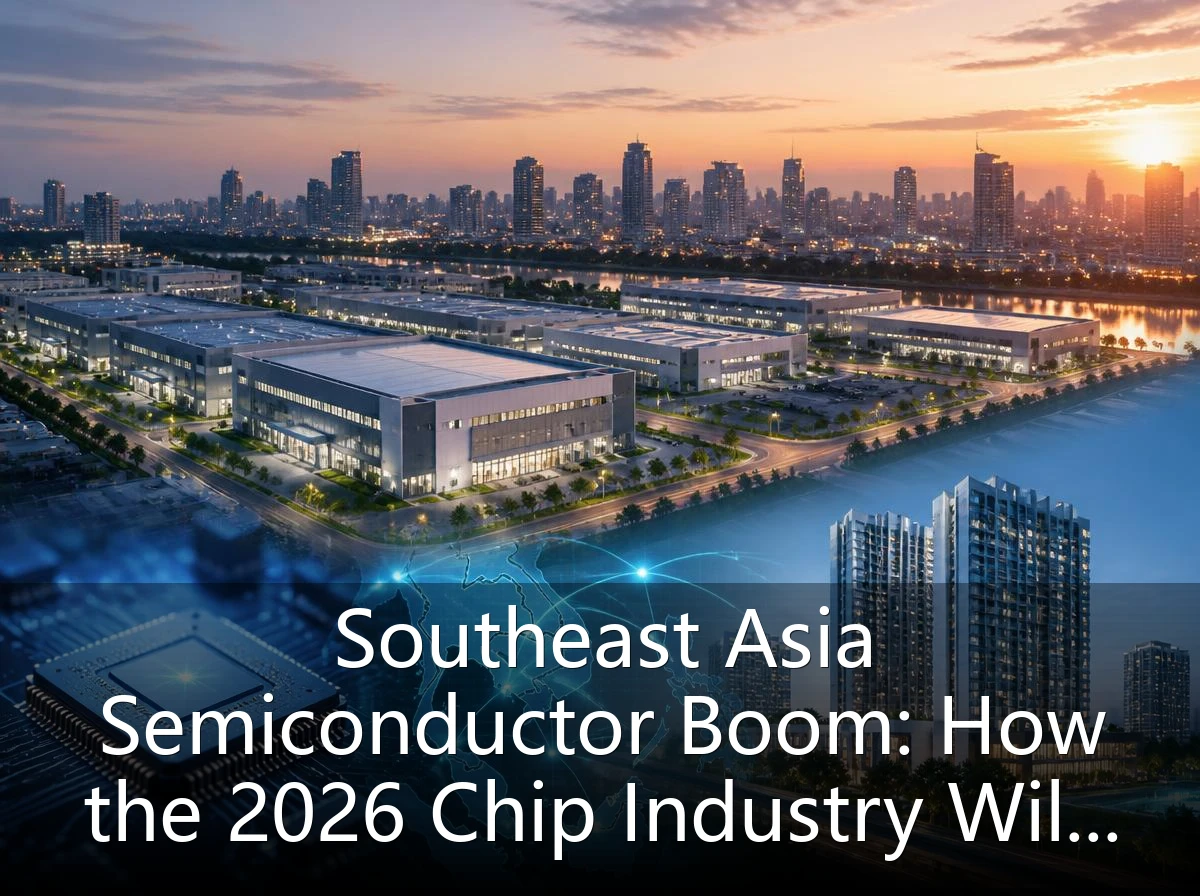
As the global semiconductor industry shifts its focus to Southeast Asia, Thailand is rapidly emerging as a new hub for chip manufacturing in the Asia-Pacific region. This industrial transformation is not only reshaping the regional economic landscape but also having a profound impact on Thailand's and the Asia-Pacific's Real Estate Investment Trust (REIT) markets. This article will provide an in-depth analysis of how the Southeast Asian semiconductor boom is driving changes in Thailand's real estate market, and how investors can seize this historic opportunity.
\n\nThe Rise of Southeast Asia's Semiconductor Industry: Thailand Becomes a New Regional Engine
\n\nIn 2026, the global semiconductor industry is undergoing unprecedented structural changes. With intensifying US-China tech competition and the advancement of supply chain diversification strategies, Southeast Asia is rapidly becoming a primary destination for global semiconductor industry relocation, leveraging its geographical advantages, policy support, and cost benefits. Among these, Thailand stands out as a new engine for the regional semiconductor industry due to its stable political environment, well-developed infrastructure, and proactive industrial policies.
\n\nAccording to the latest data from Thailand's Board of Investment (BOI), in the first half of 2026, Thailand's semiconductor-related industries attracted over $8.5 billion in investment applications, a 62% increase compared to the same period last year. These investments are mainly concentrated in chip manufacturing, packaging and testing, and semiconductor equipment manufacturing. Investment from Japan, South Korea, and Chinese Taiwan regions dominates, reflecting the accelerating shift of the global semiconductor industry chain to Southeast Asia.
\n\nThailand's "Eastern Economic Corridor" (EEC) strategy provides strong support for semiconductor industry development. Under the EEC framework, the government offers a package of incentives including tax reductions, land benefits, and simplified administrative procedures. Additionally, Thailand has established semiconductor industry cooperation mechanisms with countries like Japan and Singapore to jointly build a regional semiconductor industry ecosystem.
\n\nSemiconductor Industry Driving Changes in Thailand's Real Estate Market
\n\nThe flourishing semiconductor industry is profoundly changing Thailand's real estate landscape, particularly in the industrial and commercial real estate sectors. As chip manufacturing companies and their suppliers establish production bases in Thailand, demand for industrial plants, R&D centers, and supporting facilities has surged, driving prosperity in related real estate markets.
\n\nThe industrial real estate market in Bangkok and surrounding areas has been particularly impressive. In the first half of 2026, average industrial property rents in Bangkok and surrounding areas increased by 18% compared to the same period last year, with vacancy rates falling to a historic low of 2.3%. Especially within the EEC region, industrial property rent increases exceeded 25%, showing strong market demand.
\n\nLeading Thai real estate investment trust companies such as ARA Asset Management, Mapletree, and Logos are actively investing in industrial real estate projects related to the semiconductor industry. These REITs have obtained stable rental income and asset appreciation space by acquiring, developing, and leasing industrial factories in semiconductor industrial parks.
\n\nInvestment Value of Semiconductor Industrial Parks
\n\nSemiconductor industrial parks have become the most valuable segment in Thailand's industrial real estate market. These parks are typically located in areas with convenient transportation, equipped with high-standard infrastructure and supporting facilities, meeting the special needs of chip manufacturing enterprises for clean rooms, power supply, and logistics.
\n\nTake semiconductor industrial parks like Amata City and Eastern Starland in Chonburi Province, eastern Thailand, for example. The occupancy rates of these parks have reached nearly 100%, with average rents 30%-50% higher than ordinary industrial properties. Companies in these parks are mostly leading enterprises in the semiconductor industry chain, such as Japanese semiconductor equipment supplier Tokyo Electron and South Korean memory chip maker SK Hynix, bringing stable rental demand and long-term development potential to the parks.
\n\nFor real estate investment trusts, semiconductor industrial parks provide stable cash flow and long-term appreciation potential. On one hand, semiconductor companies typically sign long-term lease agreements (5-10 years), ensuring stable income for REITs. On the other hand, with the continuous development of the regional semiconductor industry, the value of park land and properties is expected to continue to rise.
\n\nImpact of Semiconductor Industry on Thailand's Commercial Real Estate
\n\nIn addition to industrial real estate, the prosperity of the semiconductor industry has also driven the recovery of Thailand's commercial real estate market. As chip manufacturing companies and their suppliers expand their business operations in Thailand, demand for office space, employee dormitories, and supporting facilities has also grown.
\n\nThe office market in Bangkok's Central Business District (CBD) and surrounding technology parks has been particularly prominent. In the first half of 2026, average rents for Grade A office buildings in Bangkok's CBD increased by 12% year-on-year, with vacancy rates falling to a historic low of 5.2%. Meanwhile, office space demand around technology parks is even stronger, with average rent increases reaching 15% and vacancy rates as low as 3.8%.
\n\nLeading Thai real estate investment trust companies such as The Asset Avenue and TCC Assets are actively investing in the office real estate sector, especially projects around technology parks and semiconductor industrial parks. These REITs have attracted a large number of semiconductor companies and related technology companies to occupy their high-quality office buildings through acquisitions and developments, obtaining stable rental income and asset appreciation.
\n\nInvestment Opportunities in Employee Housing Facilities
\n\nWith the expansion of semiconductor companies in Thailand, demand for employee housing facilities is also growing. Semiconductor companies typically need to provide dormitories, apartments and other accommodation facilities for employees to meet the living needs of both foreign and local employees.
\n\nThe residential rental market in Bangkok and surrounding areas has benefited, especially high-quality apartment projects near industrial parks. In the first half of 2026, average rents for high-quality apartments in Bangkok and surrounding areas increased by 8% year-on-year, with occupancy rates maintained above 95%.
\n\nReal estate investment trust companies such as Global Property and Peak REIT are actively investing in the residential rental market, especially residential projects near semiconductor industrial parks. These REITs have obtained stable rental income and long-term investment returns by acquiring and developing high-quality apartments to provide accommodation solutions for semiconductor company employees.
\n\nPromotion of Thailand's Logistics Real Estate by the Semiconductor Industry
\n\nDemand for logistics real estate from the semiconductor industry is also growing rapidly. Chip manufacturing companies and their suppliers need efficient logistics networks to support raw material imports and finished product exports, with increasing demand for high-standard logistics facilities.
\n\nThe logistics market in Thailand's eastern region has been particularly prominent. In the first half of 2026, average rents for logistics facilities in the eastern region increased by 15% year-on-year, with vacancy rates falling to a historic low of 4.5%. Especially within the EEC region, logistics facility rent increases exceeded 20%, showing strong market demand.
\n\nLeading real estate investment trust companies such as GLT and Easterbrook are actively investing in the logistics real estate sector, especially logistics projects near semiconductor industrial parks. These REITs have obtained stable rental income and asset appreciation by acquiring and developing high-standard logistics facilities to provide efficient logistics solutions for semiconductor companies.
\n\nInvestment Strategies and Risk Considerations
\n\nFor investors, real estate investment trusts related to the semiconductor industry offer unique investment opportunities, but corresponding risk factors also need to be considered. Here are some key investment strategies and risk considerations:
\n\nInvestment Strategies
\n\n- \n
- Focus on areas around industrial parks: Prioritize industrial and commercial real estate projects located in or around semiconductor industrial parks, as these areas typically have stronger industrial clustering effects and higher appreciation potential. \n
- Long-term holding strategy: The development of the semiconductor industry is a long-term process, and investors should adopt a long-term holding strategy to obtain stable rental income and asset appreciation. \n
- Diversified investment portfolio: Include semiconductor industry-related real estate investment trusts in a diversified investment portfolio to reduce risks of a single asset category. \n
- Focus on policy support: Closely follow Thailand's industrial policies and land planning, prioritizing regions and projects with strong policy support. \n
Risk Considerations
\n\n- \n
- Industry cycle fluctuations: The semiconductor industry has strong cyclical characteristics, and investors need to pay attention to industry cycle changes to avoid blind investment during industry peaks. \n
- Geopolitical risks: The global semiconductor industry is significantly affected by geopolitical factors, and investors need to pay attention to the impact of international relations changes on the industry chain. \n
- Policy change risks: Thailand's industrial policies and land planning may change, and investors need to follow policy trends and adjust investment strategies in a timely manner. \n
- Intensifying market competition: With the rapid development of the semiconductor industry in Southeast Asia, competition in related real estate markets may intensify, and investors need to pay attention to market supply and demand changes. \n
Future Outlook and Investment Recommendations
\n\nLooking ahead, the Southeast Asian semiconductor industry will continue to maintain rapid growth momentum. As an emerging hub for the regional semiconductor industry, Thailand's real estate market, especially in the industrial and commercial sectors, will continue to benefit. For investors, real estate investment trusts related to the semiconductor industry offer unique investment opportunities, but a prudent investment strategy is needed, focusing on industry cycle changes and policy trends.
\n\nBased on current market trends and industry development prospects, we recommend that investors focus on the following areas:
\n\n- \n
- Industrial real estate around semiconductor industrial parks: With the expansion of semiconductor companies in Thailand, demand for high-standard industrial plants will continue to grow, and related real estate investment trusts are expected to obtain stable returns. \n
- Office real estate in technology parks and CBDs: The growing demand for office space from semiconductor companies and their suppliers will provide a stable income source for office real estate investment trusts. \n
- High-quality residential rental market: The growing demand for high-quality housing from semiconductor company employees will provide development opportunities for residential rental investment trusts. \n
- Logistics infrastructure: The growing demand for efficient logistics networks from the semiconductor industry will bring investment opportunities for logistics real estate investment trusts. \n
In conclusion, the rise of the Southeast Asian semiconductor industry is profoundly changing the real estate market landscape in Thailand and the Asia-Pacific region, providing unique investment opportunities for real estate investment trusts. Investors should seize this historic opportunity, adopt prudent investment strategies, pay attention to industry cycle changes and policy trends, and achieve long-term stable investment returns.