
Southeast Asia Chip Demand Surge: New Landscape and Investment Opportunities in Regional Semiconductor Market by 2026
\nIn 2026, the global semiconductor industry is undergoing profound changes, with Southeast Asia emerging as a key participant in this transformation. As the digital economy accelerates and emerging technologies like artificial intelligence and IoT become widely adopted, chip demand in Southeast Asia is experiencing explosive growth. This not only reshapes the regional semiconductor market landscape but also brings new investment opportunities to the Asia-Pacific REITs market. This article will provide an in-depth analysis of the latest developments in Southeast Asia's chip industry and explore its impact on the regional economy and investment markets.
\n\nCurrent Status and Growth Drivers of Southeast Asia Chip Demand
\nAccording to the latest market data, chip demand in Southeast Asia grew by over 35% year-on-year in 2026, far exceeding the global average of 18%. This significant growth is mainly driven by the following key factors:
\n\n- \n
- Accelerated Digital Economy Transformation: Southeast Asian countries are actively promoting digital transformation, with governments and enterprises significantly increasing investments in technologies such as cloud computing, big data, and artificial intelligence, driving rapid growth in related chip demand. \n
- Electronics Manufacturing Cluster Effect: Countries like Thailand, Vietnam, and Malaysia have become important global bases for electronics manufacturing. The production of terminal products such as smartphones, computers, and consumer electronics directly drives demand for various types of chips. \n
- Automotive Electronics Trend: With the popularization of electric vehicles and smart cars, automotive electronic chip demand in Southeast Asia is experiencing explosive growth, with an expected year-on-year increase of 45% in 2026. \n
- 5G and IoT Infrastructure Development: The rapid deployment of 5G networks and IoT devices is driving demand for communication chips, sensor chips, and related products. \n
Analysis of the New Regional Semiconductor Market Landscape
\nThe rapid growth of chip demand in Southeast Asia is reshaping the regional semiconductor industry landscape. Countries are forming differentiated development paths based on their own advantages:
\n\nThailand: The New High Ground for Semiconductor Industry
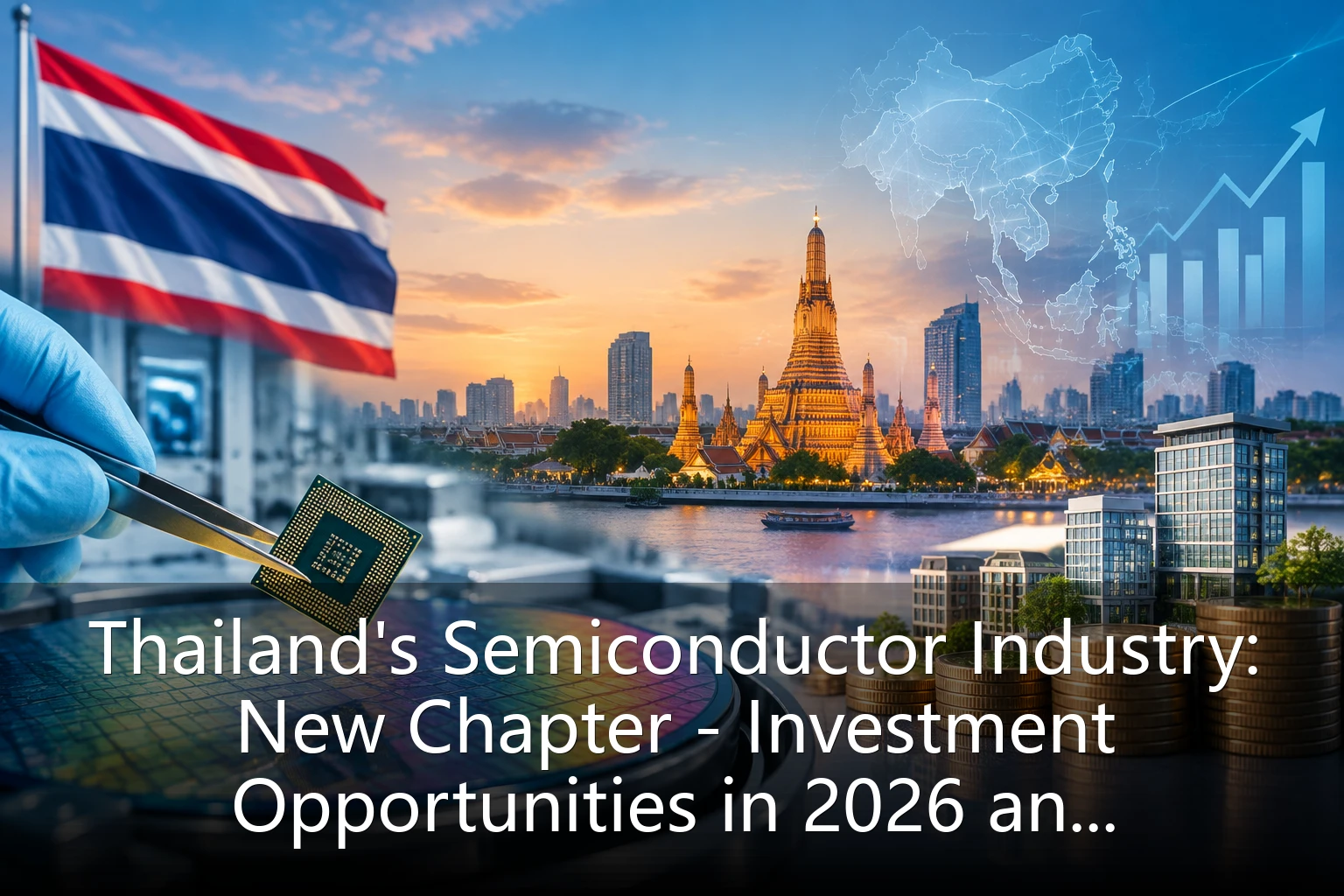
\nLeveraging its stable political environment, complete industrial chain support, and government policy support, Thailand is rapidly emerging as a new high ground for the semiconductor industry in Southeast Asia. In the first three quarters of 2026, Thailand's semiconductor industry attracted over $12 billion in foreign investment, a 68% increase from the same period last year. Bangkok and Chonburi have formed complete semiconductor industry clusters covering the entire industry chain from chip design, manufacturing, to packaging and testing.
\n\nParticularly noteworthy is Thailand's "Semiconductor Industry Development Strategy 2026-2030," which explicitly lists the semiconductor industry as a national priority development area, providing multi-faceted support including tax incentives, land supply, and talent attraction. This strategy has attracted investments from global semiconductor giants including TSMC, Samsung, and Intel, further consolidating Thailand's leading position in the regional semiconductor industry.
\n\nVietnam: Electronics Manufacturing Driving Chip Demand
\nAs an important global base for electronics manufacturing, Vietnam's chip demand mainly comes from the electronics manufacturing sector. In 2026, Vietnam's chip imports are expected to reach $28 billion, a 42% year-on-year increase. Ho Chi Minh City and Hanoi have formed industry clusters focused on consumer electronics chips, attracting significant investments from foreign electronics manufacturing enterprises.
\n\nThe Vietnamese government has also recognized the importance of developing its domestic semiconductor industry and is actively promoting the "Vietnam Semiconductor Industry Development Plan," aiming to increase the semiconductor industry's share of GDP to 3% by 2030. This plan includes measures such as building semiconductor industrial parks, cultivating professional talent, and strengthening international cooperation.
\n\nMalaysia: Clear Advantages in Packaging and Testing
\nMalaysia has clear advantages in the semiconductor packaging and testing sector, ranking as the world's third-largest base for semiconductor packaging and testing. In 2026, Malaysia's semiconductor packaging and testing industry output is expected to reach $18 billion, a 25% year-on-year increase. Penang and Kuala Lumpur have formed mature semiconductor packaging and testing industry clusters, attracting investments from internationally renowned companies including Intel, Texas Instruments, and STMicroelectronics.
\n\nWith the restructuring of the global semiconductor industry chain, Malaysia is actively extending to upstream segments such as semiconductor design and manufacturing to enhance its position in the global semiconductor industry chain. Malaysia's "Semiconductor Industry Transformation Plan" aims to enhance the international competitiveness of Malaysia's semiconductor industry through technological innovation and industrial upgrading.
\n\nImpact on Asia-Pacific REITs Market
\nThe rapid growth of chip demand in Southeast Asia and the reshaping of the regional semiconductor industry landscape have had a profound impact on the Asia-Pacific REITs market:
\n\nIndustrial Park REITs Benefit Significantly
\nWith the rapid development of the semiconductor industry in Southeast Asia, related industrial park REITs have performed prominently. Taking Thailand as an example, REITs specializing in semiconductor industrial parks achieved an average return of 7.2% in the third quarter of 2026, higher than the 5.8% average for industrial property REITs. These REITs directly benefit from the rapid development of the semiconductor industry by investing in assets such as semiconductor industrial parks and supporting facilities.
\n\nData shows that in the first three quarters of 2026, the total asset size of semiconductor industrial park REITs in Southeast Asia increased by 35% year-on-year, with 8 new listed REITs raising a total of over $6.5 billion. This trend is expected to continue, and as the semiconductor industry further develops, related industrial park REITs are likely to maintain strong growth momentum.
\n\nData Center REITs Embrace New Opportunities
\nThe rapid growth in chip demand has also driven a boom in data center construction, bringing new development opportunities for data center REITs. With the widespread application of technologies such as cloud computing, big data, and artificial intelligence, data center construction in Southeast Asia has accelerated, with over 2 million square meters of new data center space added in the first three quarters of 2026, a 45% year-on-year increase.
\n\nData center REITs directly benefit from the advancement of digital transformation by investing in data centers and related supporting facilities. Southeast Asia data center REITs centered in Thailand and Singapore achieved an average return of 6.8% in the third quarter of 2026, higher than the 5.2% average for office property REITs. This trend is expected to continue, and as digital transformation deepens, data center REITs are likely to maintain strong growth momentum.
\n\nInvestment Opportunities and Risk Analysis
\nThe rapid growth of chip demand in Southeast Asia has brought abundant investment opportunities for investors, but it is also accompanied by certain risks. Investors need to comprehensively assess and seize investment opportunities:
\n\nCore Investment Opportunities
\n- \n
- Semiconductor Industrial Park REITs: Directly benefit from the rapid development of the semiconductor industry, with stable rental income growth and continuous appreciation of asset value. \n
- Data Center REITs: Benefit from the growth of digital transformation and cloud computing demand, with good long-term development prospects. \n
- Semiconductor Industry Chain Related Enterprises: High-quality enterprises in segments such as chip design, manufacturing, and packaging and testing have long-term investment value. \n
- Semiconductor Equipment Suppliers: With the expansion of the semiconductor industry, equipment suppliers have shown significant order growth, and their performance is expected to continue to improve. \n
Main Investment Risks
\n- \n
- Geopolitical Risks: During the restructuring of the global semiconductor industry chain, geopolitical factors may bring uncertainties. \n
- Technology Iteration Risks: Semiconductor technology updates and iterations are fast, and investment needs to pay attention to changes in technology trends. \n
- Intensifying Market Competition: As countries increase their investment in the semiconductor industry, market competition may intensify, affecting corporate profitability. \n
- Macroeconomic Fluctuations: Changes in the global economic situation may affect semiconductor demand and investment environment. \n
Investment Strategy Recommendations
\nBased on the analysis of Southeast Asia's chip market development trends and the Asia-Pacific REITs market, we provide the following investment strategy recommendations for investors:
\n\nLong-term Layout, Selecting Quality Assets
\nThe semiconductor industry has long-term development prospects. Investors should adopt a long-term layout strategy, focusing on quality assets with core competitiveness and sustainable development capabilities. In terms of REIT investment, REIT products with professional management teams, high-quality assets, and stable rental income should be selected.
\n\nDiversified Investment, Risk Reduction
\nInvestors should adopt a diversified investment strategy, making reasonable allocations among different countries and types of REITs to reduce risks from a single market or asset class. At the same time, they can also appropriately allocate stocks of semiconductor industry chain related enterprises to form a diversified investment portfolio.
\n\nFocus on Policy Orientation, Seize Investment Opportunities
\nGovernment policy support for the semiconductor industry will directly affect industrial development and the investment environment. Investors should closely follow policy developments in various countries and seize investment opportunities brought by policy dividends. Especially the semiconductor industry development strategies launched by countries like Thailand and Vietnam will bring significant policy support to related industries.
\n\nConclusion
\nIn 2026, the rapid growth of chip demand in Southeast Asia is reshaping the regional semiconductor market landscape and bringing new investment opportunities to the Asia-Pacific REITs market. Investors should fully understand the development trends and investment value of Southeast Asia's semiconductor industry, adopt reasonable investment strategies, and seize this historic opportunity. At the same time, they should also be alert to potential risks, do a good job in risk management, and achieve long-term stable investment returns.
\n\nWith the deepening of the digital economy and the widespread application of emerging technologies, Southeast Asia's semiconductor industry is expected to maintain rapid growth momentum, providing continuous investment impetus for the Asia-Pacific REITs market. Investors should closely monitor market dynamics, adjust investment strategies in a timely manner, and achieve wealth growth in this historic opportunity.