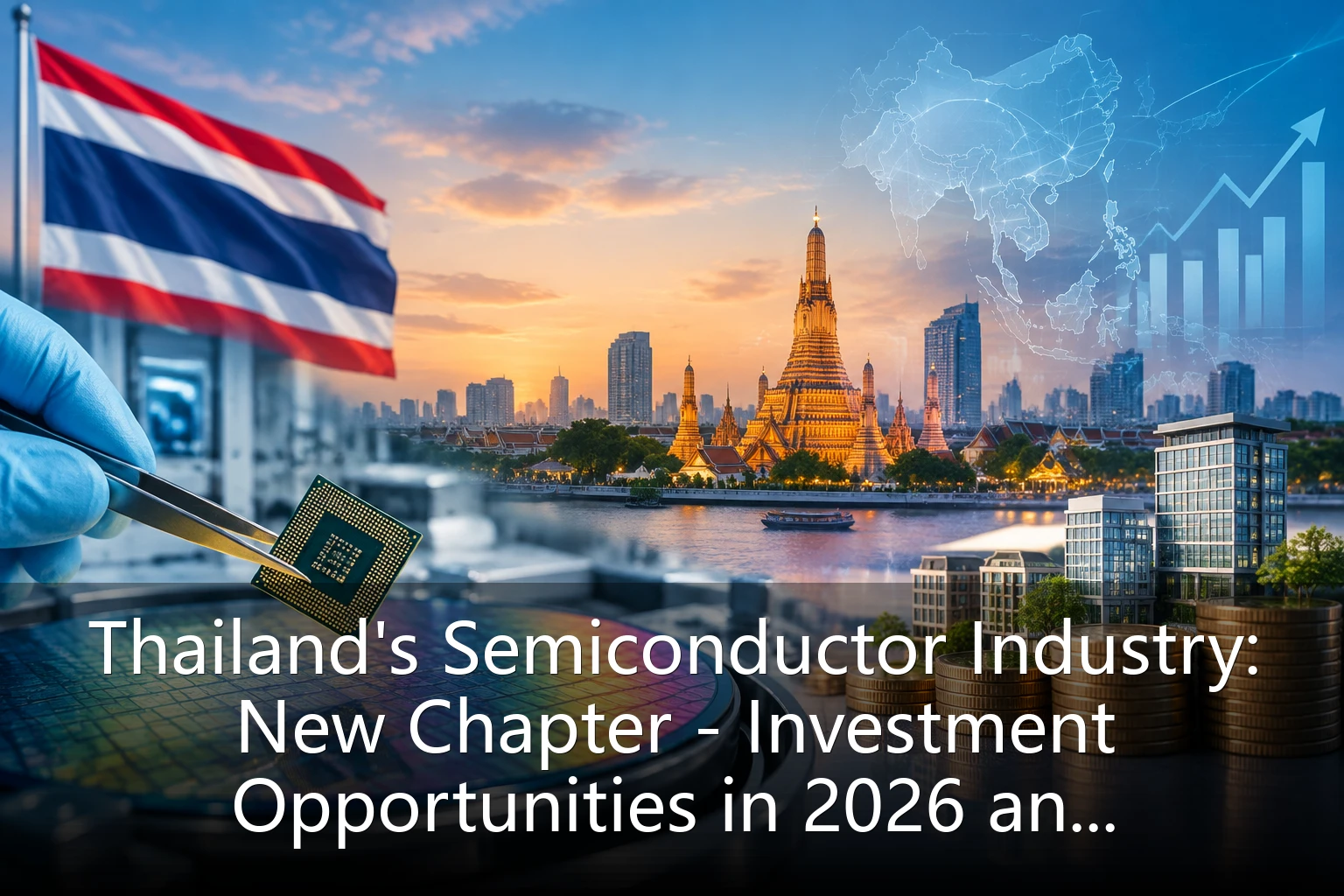
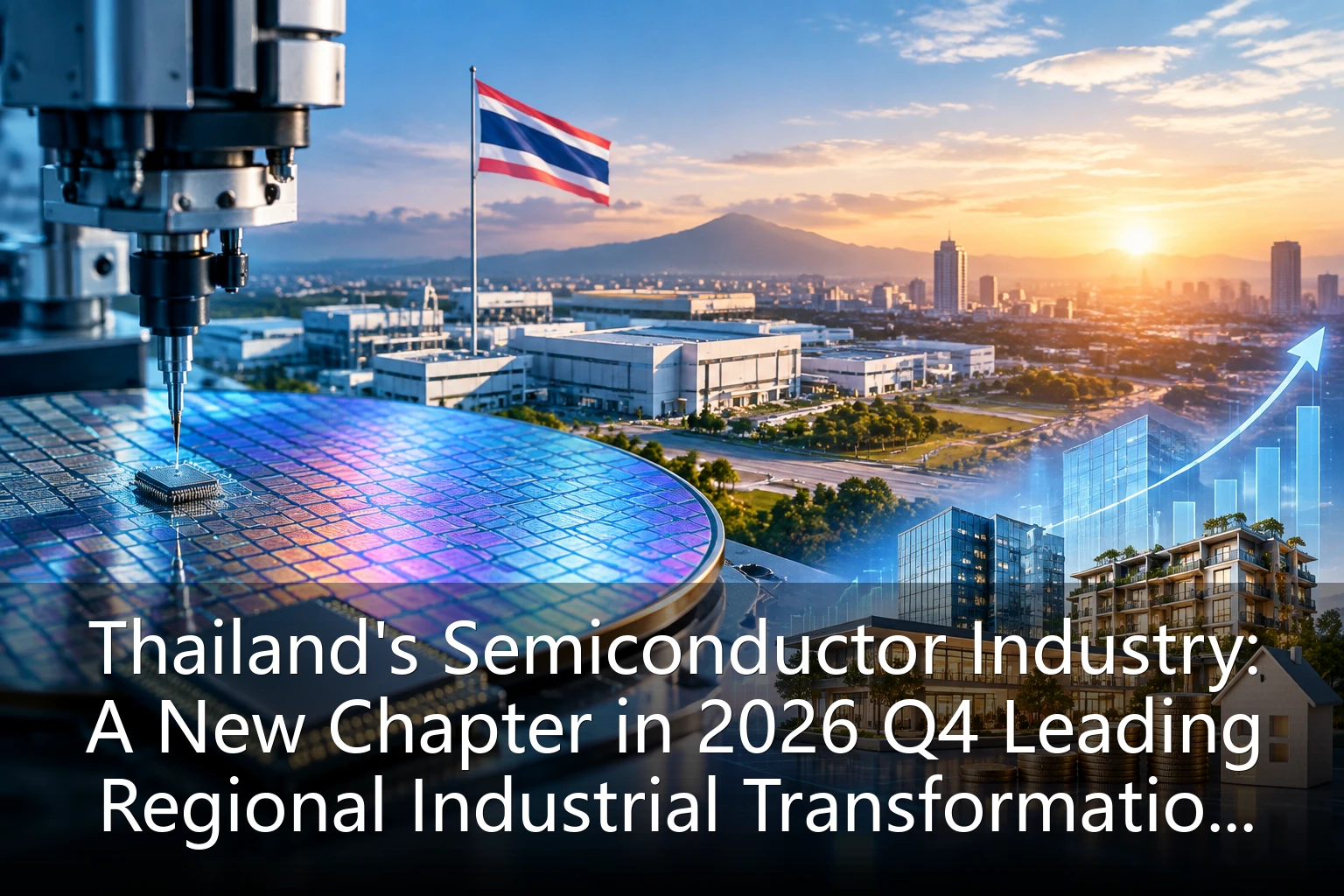
With the continuous adjustment of the global semiconductor industry landscape, Southeast Asia, especially Thailand, is rapidly emerging as a crucial node in the global semiconductor supply chain. In Q4 2026, Thailand's semiconductor industry achieved a historic breakthrough, with significant increases in production capacity and notable progress in technological innovation and industrial chain integration, bringing new investment opportunities to the Asia Pacific Real Estate Investment Trust (REITs) market.
The Rise Background of Thailand's Semiconductor Industry
The rapid development of Thailand's semiconductor industry is not accidental but the result of multiple factors working together. In recent years, the global semiconductor industry chain has faced restructuring, with countries strengthening their domestic semiconductor production capabilities. Leveraging its geographical advantages, mature manufacturing base, and strong government support, Thailand has successfully attracted investments from several international semiconductor giants.
Since 2023, the Thai government has launched the "Thailand Semiconductor Development Strategy," planning to invest over $100 billion in the next five years to develop the domestic semiconductor industry. This strategy not only covers chip manufacturing but also includes design, packaging and testing, and related supporting industries. The continuous policy support has provided strong guarantees for the development of Thailand's semiconductor industry.
Industry Scale and Investment Boom
According to the latest data from the Thailand Board of Investment (BOI), in the first three quarters of 2026, Thailand's semiconductor industry attracted cumulative foreign investment exceeding $35 billion, a year-on-year increase of 65%. Among these, wafer manufacturing projects accounted for 45%, packaging and testing projects accounted for 30%, and design and other segments accounted for 25%.
International semiconductor giants are accelerating their expansion in Thailand. Leading global semiconductor companies such as TSMC, Samsung, and Intel have all announced plans to expand their production capacity in Thailand. TSMC's factory near Bangkok has begun mass production of 28nm and 14nm chips, with plans to introduce more advanced 7nm processes by 2027. Samsung, on the other hand, is investing in a new wafer factory in Chonburi Province, expected to be operational by 2027, with an initial monthly capacity of 100,000 wafers.
Industrial Chain Integration and Innovation Breakthroughs
The rapid development of Thailand's semiconductor industry is not only reflected in capacity expansion but also in significant progress in industrial chain integration and innovation. In Q3 2026, Thailand announced the establishment of the "National Semiconductor Innovation Alliance," integrating R&D resources from over 30 domestic semiconductor-related enterprises and 5 top universities, forming an industry-academia-research integrated development model.
Technological Innovation and Talent Cultivation
In terms of technological innovation, Thailand's semiconductor industry is gradually moving up the value chain. The Advanced Semiconductor R&D Center, jointly established by the Thailand National Science and Technology Development Agency (NSTDA) and the University of Tokyo, has made breakthrough progress in the field of third-generation semiconductor materials. The performance of its developed silicon carbide (SiC) power devices has reached internationally advanced levels.
Talent cultivation is key to the sustainable development of Thailand's semiconductor industry. The Thai government has cooperated with multiple universities to establish specialized semiconductor colleges, training over 5,000 semiconductor professionals annually. Meanwhile, Thailand has also launched the "Semiconductor Talent Return Program" to attract Thai semiconductor experts working abroad to return and develop their careers in Thailand.
Impact on Asia Pacific REITs Market
The vigorous development of Thailand's semiconductor industry has had a profound impact on the Asia Pacific Real Estate Investment Trust (REITs) market. On one hand, the construction of semiconductor industrial parks has driven the demand growth for surrounding commercial and industrial real estate; on the other hand, the listing of semiconductor enterprises has provided new investment targets for REITs.
REITs Opportunities in Semiconductor Industrial Parks
With the cluster development of the semiconductor industry in Thailand, the construction of related industrial parks is in full swing. Multiple semiconductor industrial clusters have been formed in Chonburi Province, Chachoengsao Province, and other areas within the Eastern Economic Corridor (EEC) in Bangkok. The construction of these industrial parks has not only driven up land prices but also created demand for a large number of supporting commercial facilities.
Thai REITs such as "Thailand Industrial Estate REIT" (TIND) and "Bangkok Commercial Property REIT" (BANG) have begun to invest in commercial properties surrounding semiconductor industrial parks. Data shows that in the first three quarters of 2026, the stock prices of these two REITs have increased by 23% and 18% respectively, outperforming the Thai stock market index.
Investment Opportunities from Semiconductor Company Listings
As Thailand's semiconductor industry matures, an increasing number of semiconductor-related companies are seeking to go public. In 2026, five semiconductor companies have listed on the Stock Exchange of Thailand, including chip design companies, semiconductor equipment suppliers, and packaging and testing enterprises.
The listing of these semiconductor companies has provided new investment opportunities for REITs. Some REITs have begun to strategically invest in the semiconductor supply chain, such as "Thailand Technology REIT" (TECH), which has invested in several semiconductor design companies and chip distribution enterprises, obtaining considerable investment returns.
Investment Risks and Response Strategies
Although the development prospects of Thailand's semiconductor industry are broad, investors should still pay attention to potential risks. First, the cyclical fluctuations of the global semiconductor industry may affect the profitability of Thai semiconductor companies; second, the rapid pace of technological iteration requires continuous R&D investment to maintain competitiveness; finally, geopolitical factors may also impact the global semiconductor supply chain.
Investment Strategy Recommendations
For REITs investors focusing on Thailand's semiconductor industry, we recommend the following strategies:
- Diversified Investment: Invest in semiconductor-related REITs across different segments to reduce risks associated with a single segment.
- Long-term Holding: The development of the semiconductor industry is long-term, and investors should adopt a long-term holding strategy.
- Monitor Policy Trends: Closely follow changes in Thailand's semiconductor industry policies to capture policy dividends.
- Track Technology Developments: Pay attention to semiconductor technology trends and invest in companies with technological advantages.
Future Outlook
Looking ahead, Thailand's semiconductor industry is expected to maintain rapid growth. According to forecasts by the Thailand Semiconductor Industry Association, by 2030, the scale of Thailand's semiconductor industry will reach $200 billion, and its share of the global semiconductor market will increase from the current 3% to 8%.
For the Asia Pacific REITs market, the rise of Thailand's semiconductor industry will bring continuous investment opportunities. As the industrial cluster effect becomes more apparent, the value of commercial real estate surrounding semiconductor industrial parks is expected to further increase. Meanwhile, the listing of semiconductor companies will also provide more high-quality investment targets for REITs.
In summary, the rapid development of Thailand's semiconductor industry has brought new growth points to the Asia Pacific REITs market. Investors should closely follow developments in this field to seize investment opportunities and achieve asset preservation and appreciation.