
Thailand Semiconductor Industry Achieves Historic Breakthrough: Q4 2026 Global Supply Chain New Landscape
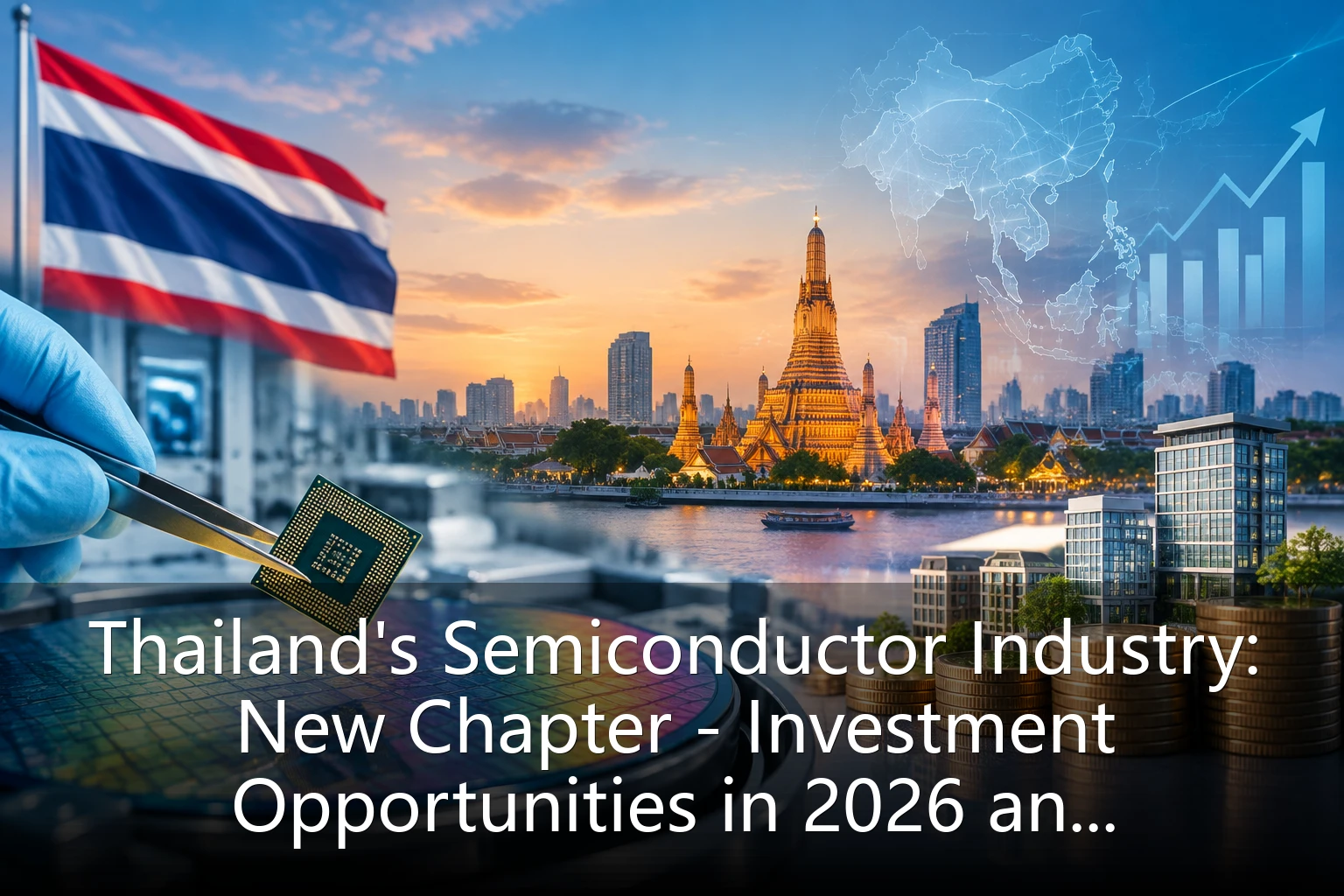
In Q4 2026, Thailand's semiconductor industry reaches a historic turning point, reshaping the global chip supply chain at an unprecedented pace. As a key hub for semiconductor manufacturing in Southeast Asia, Thailand is becoming a critical player in the global semiconductor industry map with its strategic location, policy support, and technological innovations. This article will analyze in depth the latest development trends, policy environment, technological innovations, and REITs investment opportunities brought by Thailand's semiconductor industry.
Thailand Semiconductor Industry: From Assembly Manufacturing to Innovation Center
Thailand's semiconductor industry has undergone a remarkable transformation from traditional electronic assembly to high-value-added chip manufacturing. According to the latest data from the Thailand Board of Investment (BOI), foreign investment in Thailand's semiconductor industry increased by 42% in the first three quarters of 2026 compared to the same period last year, with advanced process chip manufacturing projects accounting for over 65%. This significant growth marks Thailand's shift from a traditional electronic assembly base to a semiconductor manufacturing and innovation center.
Dr. Supachai, Chairman of the Thailand Semiconductor Industry Association (TSIA), stated: "Thailand's semiconductor industry is undergoing an unprecedented transformation and upgrading. We have not only attracted investment from leading global semiconductor manufacturers to build factories, but also cultivated a group of internationally competitive local design companies, forming a complete industrial chain from design, manufacturing to packaging and testing."
Policy Support and Industrial Upgrading: The Cornerstone of Thailand's Semiconductor Rise
In recent years, Thailand's government has launched the "Thailand 4.0" strategy and the "Eastern Economic Corridor (EEC)" plan, providing strong policy support for the development of the semiconductor industry. In October 2026, Thailand's Prime Minister announced further relaxation of foreign investment restrictions in the semiconductor industry, extending the corporate income tax reduction period from 8 to 10 years, and eliminating import tariffs on semiconductor manufacturing equipment.
The Minister of Digital Economy and Society of Thailand stated: "The semiconductor industry is key to Thailand's economic transformation and upgrading. We plan to invest 500 billion baht in semiconductor talent development, R&D innovation, and infrastructure construction in the next five years, aiming to make Thailand one of the top ten global semiconductor manufacturing bases by 2030."
These policy benefits have begun to show results. Global semiconductor giants such as TSMC, Samsung, and Intel have announced expanded investments in Thailand to build advanced process chip production lines. Meanwhile, equipment manufacturers such as Tokyo Electron of Japan and ASML of the Netherlands are accelerating their layout in Thailand, forming a complete industrial ecosystem.
Technological Innovation and Industrial Upgrading: Building Thailand's Semiconductor Core Competitiveness
Technological innovation is the core driving force behind the rise of Thailand's semiconductor industry. In Q3 2026, Thailand's National Science and Technology Development Agency (NSTDA) established the "Southeast Asia Semiconductor Innovation Center" in cooperation with leading global semiconductor research institutions, focusing on R&D of third-generation semiconductor materials and advanced packaging technologies.
Dr. Somchai, Director of the Semiconductor Research Center at Bangkok University, pointed out: "Thailand is transforming from 'manufacturing' to 'creation.' We have made breakthroughs in third-generation semiconductor materials such as gallium nitride (GaN) and silicon carbide (SiC), which have broad application prospects in 5G communications, new energy vehicles, and renewable energy."
At the same time, Thailand's semiconductor industry is actively promoting digital transformation. In September 2026, the Thailand Federation of Industry launched the "Smart Semiconductor Factory" program in cooperation with IBM, introducing artificial intelligence, Internet of Things, and big data technologies to improve production efficiency and product quality. This transformation enables Thailand's semiconductor manufacturing enterprises to meet the global demand for high-quality, high-reliability chips.
Global Supply Chain Restructuring: Thailand Becomes a New Hub for Semiconductor Industry
The global semiconductor supply chain is undergoing profound restructuring, and Thailand is becoming a key node in this process with its strategic location and industrial advantages. As geopolitical tensions intensify, global semiconductor companies are implementing the "+1" strategy, establishing diversified production bases in Southeast Asia, with Thailand becoming one of the preferred destinations.
Data from the Thailand Board of Investment shows that in the first three quarters of 2026, Thailand's semiconductor industry created more than 30,000 new jobs, 60% of which were high-skilled R&D and engineering positions. This growth has not only driven local economic development but also promoted the prosperity of related supporting industries, including semiconductor materials, equipment manufacturing, and logistics services.
A senior analyst at the Thailand Institute of International Trade and Development under the Ministry of Commerce stated: "The rise of Thailand's semiconductor industry is reshaping the economic landscape of Southeast Asia. As the industrial chain continues to improve, Thailand is expected to become a hub connecting East Asian semiconductor manufacturing with Southeast Asian terminal markets, injecting new momentum into regional economic integration."
Investment Opportunities and REITs Layout: Value Investment in Semiconductor Industry
The rapid development of Thailand's semiconductor industry has brought unprecedented opportunities for investors. As a professional investment research platform focusing on Thailand and Asia-Pacific REITs, Tai Global Investment Research believes that REITs investments related to the semiconductor industry will become a hot investment direction for 2026-2027.
Data from the Thailand Real Estate Investment Trust Association shows that in the first three quarters of 2026, semiconductor industry-related REITs performed excellently, with an average return of 12.5%, outperforming the Thailand stock market index during the same period. Outstanding performers include Thailand High-Tech Industrial Park REIT, Bangkok Semiconductor Industrial Park REIT, and Eastern Economic Corridor Semiconductor Logistics REIT.
The chief analyst of Tai Global Investment Research pointed out: "Semiconductor industry REITs investment has a dual value growth logic: on the one hand, the rental income growth brought by the rapid development of the semiconductor industry, on the other hand, the asset value appreciation brought by the regional value enhancement of Thailand's Eastern Economic Corridor and other regions. We recommend that investors focus on semiconductor industry REITs products with long-term leases, high tenant credit ratings, and strategic locations."
In addition, Thailand's semiconductor industry ETF has also attracted the attention of global investors. In October 2026, Thailand's first semiconductor industry ETF was listed on the Stock Exchange of Thailand, with a first-day trading volume exceeding 10 billion baht, reflecting the market's high recognition of Thailand's semiconductor industry prospects.
Challenges and Outlook: Sustainable Development of Thailand's Semiconductor Industry
Despite significant achievements, Thailand's semiconductor industry still faces many challenges. Talent shortage is a key factor constraining industrial development. Data from the Thailand Semiconductor Industry Association shows that the industry talent gap exceeds 50,000 people, especially in high-end R&D and engineering talent.
To address this challenge, the Thai government has launched the "Semiconductor Talent Development Program," cooperating with domestic and foreign universities to establish semiconductor majors, providing scholarships and internship opportunities, while introducing international top talents. In addition, Thailand plans to establish a semiconductor industry innovation fund to support the technological R&D and innovation capabilities of local enterprises.
Looking ahead, Thailand's semiconductor industry is expected to maintain rapid growth. According to predictions by Thailand's Ministry of Industry, by 2028, the output value of Thailand's semiconductor industry will reach 1.5 trillion baht, accounting for 5% of the global semiconductor market share, becoming the core hub of the semiconductor industry in Southeast Asia.
The Minister of Digital Economy and Society of Thailand stated: "The semiconductor industry is an important engine for Thailand's sustainable economic development. We will continue to optimize the policy environment, strengthen international cooperation, promote technological innovation, and enable Thailand's semiconductor industry to occupy a higher position in the global value chain."
Conclusion: Seizing Investment Opportunities in Thailand's Semiconductor Industry
In Q4 2026, Thailand's semiconductor industry achieves a historic breakthrough, reshaping the global chip supply chain at an unprecedented pace. Policy support, technological innovation, and global supply chain restructuring have provided strong momentum for the development of Thailand's semiconductor industry, bringing rich REITs investment opportunities for investors.
For investors, focusing on Thailand's semiconductor industry-related REITs, ETFs, and leading enterprise stocks will be an important way to seize this industrial wave. At the same time, investors should also pay attention to industrial policy changes, technological development trends, and global supply chain dynamics to make more informed investment decisions.
As the Secretary-General of the Thailand Board of Investment said: "The rise of Thailand's semiconductor industry is not accidental, but the result of the joint action of strategic planning, policy support, and market forces. We welcome global investors to participate in the development of Thailand's semiconductor industry and share the opportunities and dividends brought by this industry together."
Against the background of profound changes in the global semiconductor industry landscape, Thailand is becoming an indispensable part of the global semiconductor supply chain with its unique advantages. For investors focusing on Asia-Pacific REITs and semiconductor industry investments, Thailand is undoubtedly a market worthy of high attention.