
chip-market-rates
New Landscape in the Memory Chip Market: Southeast Asian Supply Chain Restructuring and Investment Opportunities in 2026
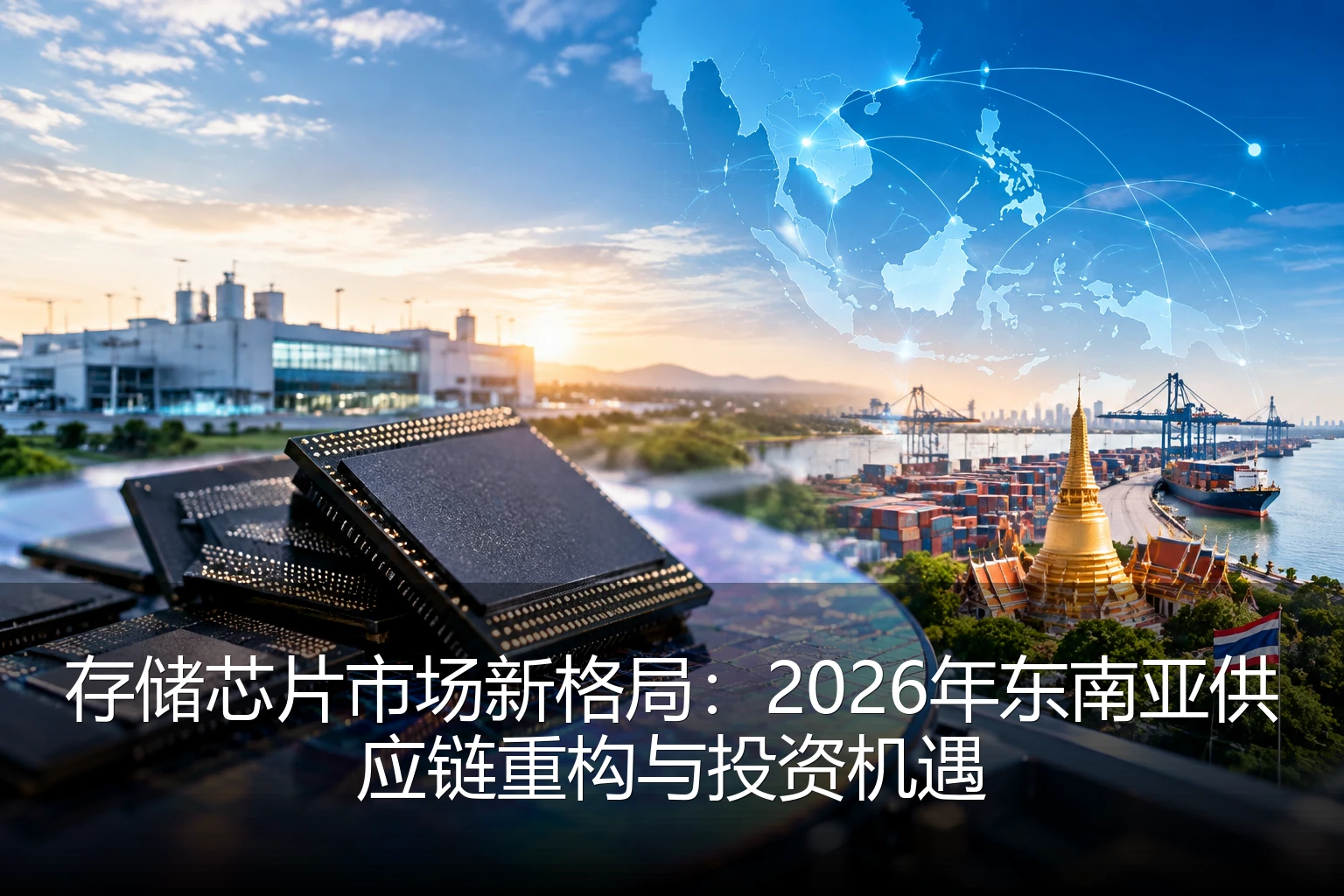
Storage chips, as a vital component of the semiconductor industry, have always been a focus of investor attention regarding market dynamics. In 2026, the storage chip market is undergoing unprecedented transformation due to the acceleration of global digital transformation and the explosion of artificial intelligence applications. Particularly in Southeast Asia, the semiconductor industry, represented by Thailand, is reshaping the global storage chip supply chain landscape, presenting new opportunities for investors.
Storage Chip Market Status and Trends
In 2026, the global storage chip market exhibits a state of robust supply and demand. Industry data indicates that the demand for high-capacity, high-performance storage chips continues to climb with the rapid development of emerging applications such as cloud computing, big data, and artificial intelligence. Concurrently, traditional application sectors like consumer electronics, automotive electronics, and industrial control maintain stable demand for storage chips.
In terms of product structure, DRAM and NAND Flash remain the two mainstays of the storage chip market. However, with continuous technological advancements, new storage technologies such as 3D NAND, DDR5, and LPDDR5 are rapidly gaining traction, driving storage chips toward higher density, lower power consumption, and faster speeds.
From a price trend perspective, storage chip prices showed a moderate upward trend in the first half of 2026. This is influenced by both supply-demand relationships and factors such as rising raw material costs and constrained capacity expansion. Specifically, DDR4 storage chips reached a near ten-year high, demonstrating the strong demand in the storage market.
The Emerging Role of Southeast Asia in the Storage Chip Supply Chain
For a long time, the global storage chip supply chain was concentrated in regions such as South Korea, Japan, and Taiwan. However, in recent years, Southeast Asia, especially Thailand, has rapidly emerged as a new hub for the storage chip industry. This change is mainly attributable to the following aspects:
Policy Support: The Thai government has introduced a series of preferential policies to attract semiconductor investment, including tax reductions, land incentives, and talent acquisition, creating a favorable environment for the development of the storage chip industry.
Geographical Advantage: Thailand is centrally located in Southeast Asia, offering convenient transportation and lower logistics costs, which benefits the regional distribution and global export of storage chip products.
Industrial Clusters: As multiple international semiconductor giants invest and establish manufacturing bases in Thailand, the storage chip industry chain is gradually becoming complete, forming a full industrial ecosystem from design to manufacturing and testing.
Cost Advantages: Compared to traditional semiconductor powerhouses, Thailand possesses distinct cost advantages in labor and land, which helps storage chip manufacturing enterprises control production costs.
Statistics show that between 2023 and 2026, Thailand has attracted semiconductor investment applications totaling $26.8 billion, setting a record high. Investments related to storage chips account for over 40% of this total, indicating Thailand's immense potential in the storage chip sector.
The Impact of the Thai Semiconductor Industry on the Storage Chip Market
The rapid development of the Thai semiconductor industry has had a profound impact on the global storage chip market. Firstly, Thailand is gradually becoming a major manufacturing base for global storage chips. Multiple international storage chip giants have established production bases in Thailand, significantly enhancing Thailand's position in the global storage chip supply chain. Secondly, the rise of Thailand's semiconductor industry has also driven the improvement of the regional memory chip industry chain. From upstream equipment and material supply to midstream wafer manufacturing and chip design, and downstream packaging and testing, Thailand is gradually building a complete memory chip industry ecosystem.
Furthermore, the development of Thailand's semiconductor industry has promoted the advancement of regional memory chip technology. Through cooperation with international leading enterprises, local Thai companies are continuously enhancing their innovation capabilities in memory chip design and manufacturing processes, injecting new vitality into the memory chip market.
Thailand Memory Chip Manufacturing Base Construction
In 2026, the country's first 12-inch wafer fab is scheduled to commence construction, marking a significant step for Thailand in the memory chip manufacturing field. This fab focuses on NAND Flash memory chip production and is expected to enter operation in 2027, which will substantially increase Thailand's memory chip capacity.
Concurrently, Thailand is actively building memory chip packaging and testing bases, attracting investment from multiple international packaging and testing giants. These packaging and testing bases not only serve Thailand's domestic memory chip production but will also provide packaging and testing services to neighboring countries and regions, further solidifying Thailand's position in the regional memory chip supply chain.
Memory Chip Price Fluctuation Analysis
The memory chip market price fluctuations in 2026 exhibit new characteristics. On the one hand, DDR4 memory chip prices reached a ten-year high, demonstrating strong demand for traditional memory chips; on the other hand, the increase in the spot market has gradually slowed, reflecting subtle changes in the market's supply and demand relationship.
This phenomenon of price divergence is mainly caused by the following factors:
Demand Structure Changes: With the popularization of next-generation memory technologies such as DDR5, the market demand for DDR4 is gradually shifting from new demand to replacement demand, leading to price divergence.
Capacity Adjustment: In response to memory chip price fluctuations, manufacturers are adjusting production capacity strategies, causing changes in the supply and demand relationship of different types of memory chips.
Inventory Cycles: The memory chip industry has distinct cyclical characteristics, and the current phase is one of inventory adjustment, which affects the price trend in the spot market.
Supply Chain Restructuring: With the rise of the Southeast Asian memory chip supply chain, the global distribution of memory chip capacity is changing, influencing the price transmission mechanism between regions.
Investment Opportunities and Linkage with Asia-Pacific REITs Market
The transformation of the memory chip market presents new opportunities for investors while also having a close connection with the Asia-Pacific REITs market. On the one hand, the development of the memory chip industry drives the growth of related real estate demand, particularly the demand for properties such as semiconductor industrial parks and R&D centers, providing high-quality assets for the REITs market.
On the other hand, the expansion of enterprises in the memory chip industry chain has spurred the prosperity of surrounding commercial real estate, including office buildings, apartments, and retail properties, which are all important components of REITs investments. Especially in Thailand, as the agglomeration effect of the semiconductor industry becomes evident, the real estate value in related areas is continuously increasing, bringing considerable returns to REITs investors.
Semiconductor Industry REITs Investment Opportunities In recent years, several REIT products focused on the semiconductor industry have emerged in the Asia-Pacific region. These REITs share in the dividends of the memory chip industry's development by investing in related properties such as semiconductor industrial parks and R&D centers. In Thailand, in particular, semiconductor REITs have shown remarkable performance due to the rapid growth of the semiconductor industry, making them a hot topic for investors.
For investors, it is crucial to pay attention to the correlation between the memory chip market dynamics and REIT performance. On one hand, the market vitality of memory chips directly affects the occupancy rate and rental levels of related properties; on the other hand, the dividend income of REITs is closely related to the development cycle of the memory chip industry, requiring investors to grasp the industry rhythm and optimize asset allocation.
Future Outlook and Investment Strategies
Looking ahead, the memory chip market is expected to show the following development trends:
* Accelerated technological iteration: With the popularization of new technologies such as 3D NAND and DDR5, memory chips will develop towards higher density, lower power consumption, and faster speeds, driving industrial upgrading.
* Supply chain restructuring: Southeast Asia, especially Thailand, will play a more significant role in the global memory chip supply chain, changing the traditional industrial landscape.
* Diversified demand: In addition to the traditional consumer electronics sector, emerging applications such as automotive electronics, industrial control, and artificial intelligence will become important growth drivers for memory chip demand.
* Slowing price volatility: As the market gradually matures, the volatility of memory chip prices will decrease, and the industry will enter a relatively stable development phase.
Based on the above trends, investors can adopt the following strategies:
* Focus on industry chain layout: Invest in key segments of the memory chip industry chain, especially companies with technological advantages and economies of scale.
* Seize regional opportunities: Pay attention to the semiconductor industry development in Southeast Asia, particularly Thailand, to capture investment opportunities arising from the restructuring of the regional supply chain.
* Allocate REIT assets: Appropriately allocate REIT assets related to the semiconductor industry to share the real estate appreciation dividends brought by industrial development.
* Long-term value investment: Since the memory chip industry has cyclical characteristics, investors should adopt a long-term value investment strategy to avoid the impact of short-term market fluctuations.
In summary, the memory chip market in 2026 is at a critical juncture where change and opportunity coexist. As the status of Southeast Asia, particularly Thailand, in the memory chip supply chain continues to rise, investors should closely monitor market dynamics, seize investment opportunities from industrial transformation, and achieve stable long-term returns through rational asset allocation.