
AI boom drives electronics: semiconductor nominal value added grows 7.3% annually
The AI (Artificial Intelligence) boom is reshaping global electronics demand structure and elevating the status of semiconductors in Singapore's electronics sector. As global enterprises ramp up AI infrastructure investment, Singapore's electronics exports and output have benefited in recent years. However, electricity costs and supply chain risks from the Middle East conflict may impact this year's performance.
The Ministry of Trade and Industry (MTI) pointed out in its Q1 economic survey report that nominal value added of the semiconductor segment grew at an average annual rate of 7.3% between 2000 and 2025, outpacing the electronics cluster's 4.9%.
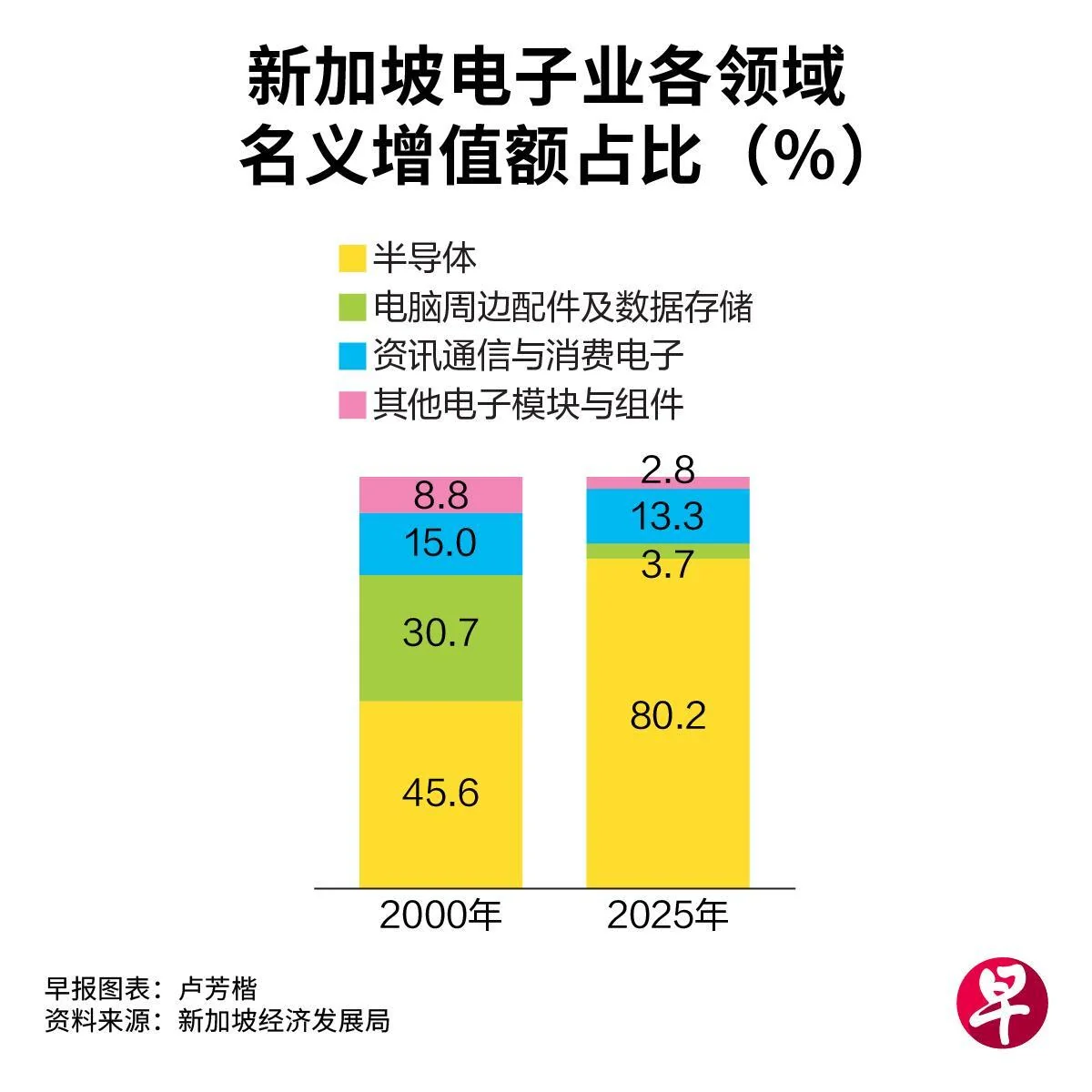
Semiconductors' share of the electronics cluster's nominal value added rose from 45.6% in 2000 to 80.2% in 2025.
Electronics is the largest cluster in Singapore's manufacturing sector, accounting for 43.2% of manufacturing nominal value added in 2025 and 8.0% of Singapore's overall nominal value added.
MTI noted that the global electronics industry experienced a significant downturn in 2023, mainly due to weakened consumer electronics demand after the COVID-19 pandemic, leading to supply chain destocking and production cuts. However, with the rise of the AI boom, global semiconductor revenue grew by 19.7% in 2024, reversing the 8.2% decline in 2023.
Cloud services and tech capex heating up
Major cloud service providers and tech companies are increasing capital expenditure. Bloomberg Intelligence estimates that capital expenditure by major cloud service providers will increase from about USD 290 billion (approximately SGD 370.7 billion) in 2024 to over USD 800 billion by 2026, driving demand for data centers, high-speed network equipment, and dedicated server hardware.
The rising AI infrastructure investment has also boosted Singapore's electronics non-oil domestic exports (NODX). Singapore's electronics NODX grew by 12.7% in 2025, with year-on-year growth further expanding to 57.9% in Q1 this year.
Q1 real output of the electronics cluster grew 26.1% year-on-year, driven mainly by 35.3% growth in infocomm and consumer electronics and 28.4% growth in semiconductors.
Risk warning: electricity cost increases and supply chain disruptions
MTI also cautioned that the Middle East conflict could push up electricity costs and bring supply chain risks for key semiconductor raw materials. If these downside risks do not materialize, supported by increased AI applications and sustained capital expenditure by global cloud service providers and tech companies, Singapore's electronics sector is expected to continue its strong growth.