
Industry Talent Gap Drives Customized Bootcamp
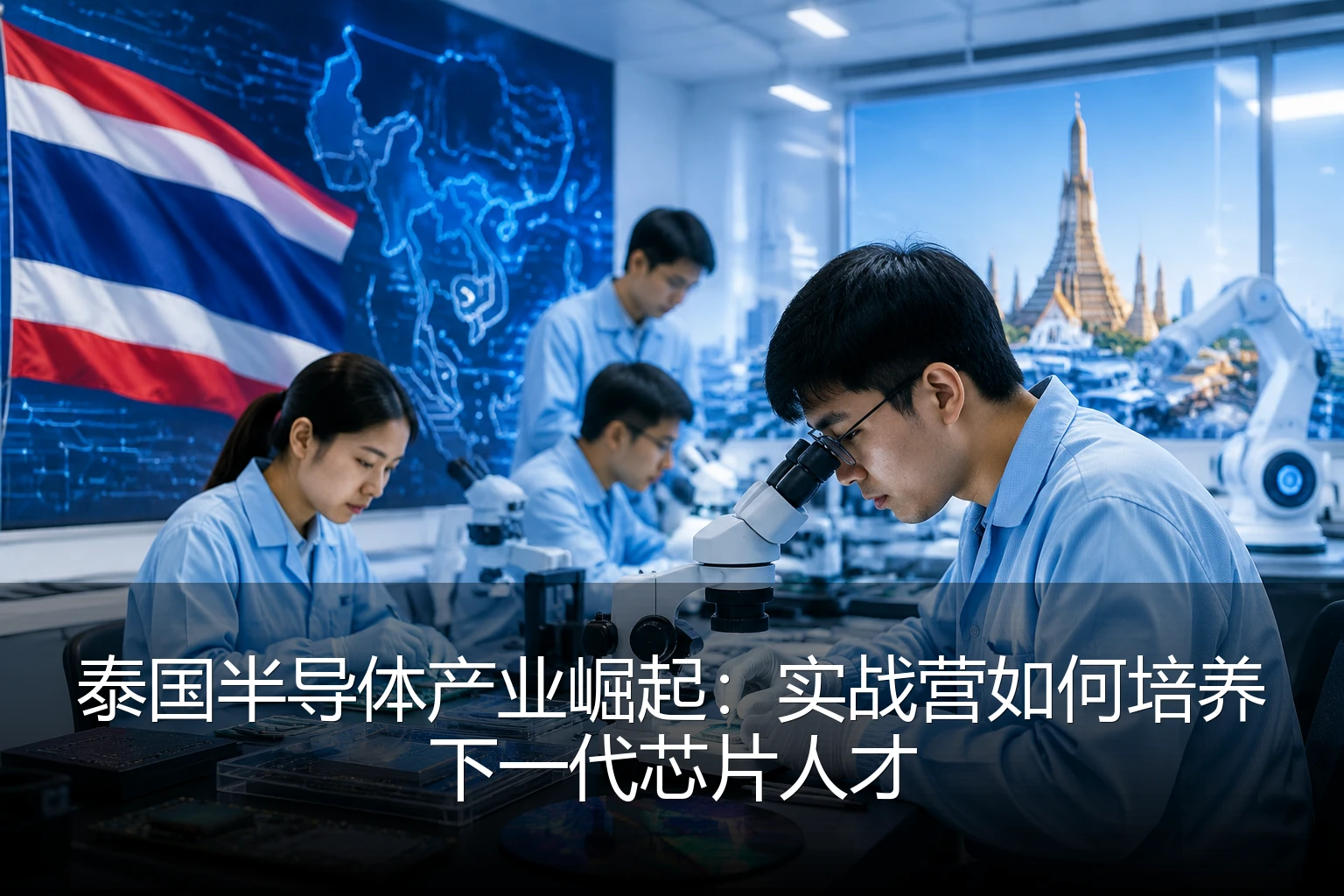
On July 28, 2026, XinHua University held a press conference in Suzhou to officially launch the 'Xinhuo' Semiconductor Bootcamp. The project partners with JCET, TongFu Microelectronics, and Huatian Technology—the three major OSAT leaders—as well as EDA vendor Empyrean Technology, offering a 6-month full-time hands-on training program focused on advanced packaging areas (2.5D/3D packaging, silicon bridge technology, Chiplet integration).
According to the "2026 IC Industry Talent White Paper" released by the China Semiconductor Industry Association in July, there is a shortage of 42,000 advanced packaging engineers. Current university education emphasizes theory, with a severe lack of practical experience. The first bootcamp plans to enroll 60 students, targeting fresh master's graduates in microelectronics, materials, mechanical engineering, and junior engineers with 1-3 years of experience.
Curriculum: Full Coverage from Design to Production Line
The curriculum is divided into three phases:
- Basic Module (Months 1-2): Taught at the XinHua University Suzhou Research Institute, covering packaging physics, thermal simulation, reliability analysis, etc., with hands-on practice using Empyrean’s advanced packaging EDA tools.
- Core Practice (Months 3-5): Students are grouped to work on JCET's Chiplet production line and TongFu Microelectronics' TSV (Through-Silicon Via) process line, completing a 2.5D packaging integrated tape-out project under the guidance of senior engineers.
- Graduation Assessment (Month 6): Each team must submit a packaging design solution based on actual wafers, evaluated on key metrics such as KGD (Known Good Die) test, warpage control, and thermal performance.
XinHua University President Zhang Hong said: "Currently, China's OSAT output value accounts for 40% of the global total, but high-end packaging like HBM (High Bandwidth Memory) and CoWoS (Chip-on-Wafer-on-Substrate) is still dominated by TSMC and Samsung. Our goal is to train a group of practical engineers who can independently solve challenges such as 3D stacking thermal dissipation and micro-bump interconnection."
Deep Enterprise Engagement: Real Production Lines and Fast-Track Hiring
Wang Lei, Vice President of JCET's Advanced Packaging Business Unit, said that the company will open its latest 2.5D packaging line for the bootcamp and cover part of the equipment usage costs. Outstanding students can directly receive a job offer from JCET's 'Xinhuo Program' with a 30% salary increase. TongFu Microelectronics will provide AMD-based Chiplet heterogeneous integration cases as training projects.
Notably, the bootcamp also introduces a 'dual-mentorship system'—each student is assigned one academic mentor from the university and one technical mentor from the enterprise, with weekly technical reviews. Upon completion, graduates receive a joint certification from XinHua University and the three companies, recognized as a reference for professional title evaluation within the Yangtze River Delta Semiconductor Alliance.
Industry Response and Future Plans
After the announcement, over 200 students have registered, with a competition ratio of 3:1. Li Tao, a junior engineer from Shanghai Zhangjiang, said: "Our company is transitioning to Chiplet design, and I urgently need systematic training on the full process—this bootcamp perfectly matches my needs."
XinHua University revealed that the second phase will consider adding a RISC-V IP integration practice track and plans to collaborate with IMEC (Interuniversity Microelectronics Centre) to introduce advanced photoresist process courses. Against the backdrop of accelerating domestic substitution, the semiconductor bootcamp is evolving from a 'general' model to a 'specialized' one, becoming a key link in solving the talent shortage. (Reporter Zhao Ming reporting from Suzhou)